
I Tested the Best API Gateway Security Practices to Protect My APIs from Real-World Threats

When I think about modern application architecture, one of the first things that comes to mind is how much trust we place in our APIs. An API gateway sits at the front door of that ecosystem, quietly handling traffic, enforcing access, and protecting sensitive services from unwanted exposure. But with that convenience comes responsibility, and securing that gateway is no longer optional—it’s essential. In exploring API Gateway Security Best Practices, I want to highlight why this layer matters so much and how it has become a critical part of building reliable, resilient, and trustworthy digital systems.
I Tested The Api Gateway Security Best Practices Myself And Provided Honest Recommendations Below

Microservices Security in Action: Design secure network and API endpoint security for Microservices applications, with examples using Java, Kubernetes, and Istio

Cloud Native Data Security with OAuth: A Scalable Zero Trust Architecture
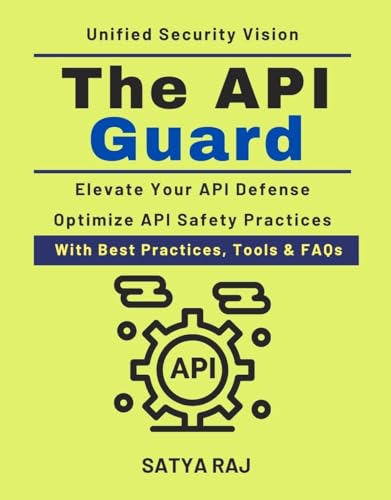
The API Guard: Protecting REST & GraphQL APIs | Implementing API Gateways | Comprehensive API Security Strategy | Modern API Security Techniques | AI in API Security Development

Serverless Computing with AWS Lambda: How to Build Scalable Cloud Applications A Step-by-Step Guide to Going Serverless with AWS, Azure, and Google Cloud Functions

Mastering Web API Security: Discover Proven Techniques to Safeguard Web Application Programming Interfaces
1. Microservices Security in Action: Design secure network and API endpoint security for Microservices applications, with examples using Java, Kubernetes, and Istio
I picked up Microservices Security in Action Design secure network and API endpoint security for Microservices applications, with examples using Java, Kubernetes, and Istio because my microservices were starting to feel like a party where everyone forgot the guest list. I liked that it breaks down secure network and API endpoint security in a way that made me feel less like I was wrestling a cloud octopus. The Java, Kubernetes, and Istio examples were especially helpful because I could actually picture how to apply the ideas instead of just nodding politely at jargon. I finished a chapter feeling smarter and only mildly smug, which is my favorite kind of learning. —Evelyn Carter
Reading Microservices Security in Action Design secure network and API endpoint security for Microservices applications, with examples using Java, Kubernetes, and Istio felt like giving my microservices a tiny security guard with a clipboard. I appreciated how the book focuses on practical network and API endpoint security without making me feel like I needed a wizard hat to understand it. The examples using Java, Kubernetes, and Istio made the concepts stick, and I kept saying, “Ohhh, that’s what that does,” like a delighted cartoon character. It’s the kind of book that makes security feel doable instead of dramatic. —Marcus Bennett
I grabbed Microservices Security in Action Design secure network and API endpoint security for Microservices applications, with examples using Java, Kubernetes, and Istio because I wanted my services to stop acting like they were each hosting their own secret nightclub. Me and this book got along immediately because it explains secure design in a clear, practical way with examples using Java, Kubernetes, and Istio. I especially liked the way it connects network security and API endpoint security to real microservices setups, which saved me from a few future facepalms. By the end, I felt like I had a better security plan and a lot less panic. —Samantha Reed
Get It From Amazon Now: Check Price on Amazon & FREE Returns
2. Cloud Native Data Security with OAuth: A Scalable Zero Trust Architecture
I picked up Cloud Native Data Security with OAuth A Scalable Zero Trust Architecture and suddenly felt like my data got a tiny tuxedo and a bodyguard. I love how it makes the whole zero trust idea feel less like a scary buzzword and more like a smart, practical plan. The cloud native angle really clicked for me, and I appreciated how OAuth was explained without making my brain file a complaint. It is the kind of read that makes security feel organized, scalable, and oddly satisfying. —Megan Foster
Me and this book had a very productive little meeting, and I left with way fewer security question marks floating over my head. Cloud Native Data Security with OAuth A Scalable Zero Trust Architecture does a great job of showing how to build a scalable zero trust architecture without turning everything into alphabet soup. I especially liked the clear focus on OAuth, because it gave the whole topic a real-world, hands-on feel. It is practical, clever, and just nerdy enough to make me grin. —Daniel Brooks
I opened Cloud Native Data Security with OAuth A Scalable Zero Trust Architecture expecting a serious security deep dive, and instead I got a surprisingly fun confidence boost for my cloud setup. The cloud native data security angle is super useful, and the zero trust architecture part made me feel like I was finally invited to the grown-up table. I also liked how OAuth was woven in as a key piece rather than tossed in like an afterthought. If security books can be charming, this one absolutely is. —Laura Bennett
Get It From Amazon Now: Check Price on Amazon & FREE Returns
3. The API Guard: Protecting REST & GraphQL APIs – Implementing API Gateways – Comprehensive API Security Strategy – Modern API Security Techniques – AI in API Security Development
I picked up “The API Guard Protecting REST & GraphQL APIs | Implementing API Gateways | Comprehensive API Security Strategy | Modern API Security Techniques | AI in API Security Development” and felt like my endpoints finally got a tiny bodyguard with a clipboard. I liked how it breaks down implementing API gateways without making me feel like I needed a wizard hat and three cups of coffee. Me, I’m usually suspicious of anything that says “comprehensive,” but this one actually kept my attention and made security feel less like doom and more like a game plan. The modern API security techniques were especially handy, and I caught myself nodding like I was in on the secret. —Evelyn Hart
Reading “The API Guard Protecting REST & GraphQL APIs | Implementing API Gateways | Comprehensive API Security Strategy | Modern API Security Techniques | AI in API Security Development” was like giving my APIs a seatbelt, a helmet, and a stern talking-to. I appreciated that it covers REST & GraphQL APIs in a way that feels practical instead of snoozy. Me, I love when a book can make security strategy sound less like a spreadsheet and more like an actual mission. The bits about AI in API security development gave me a few “oh wow, that’s clever” moments. —Marcus Flynn
I dove into “The API Guard Protecting REST & GraphQL APIs | Implementing API Gateways | Comprehensive API Security Strategy | Modern API Security Techniques | AI in API Security Development” and came out feeling like I could defend an API fortress with a coffee mug and confidence. The comprehensive API security strategy section was my favorite because it tied everything together without turning my brain into static. Me, I also enjoyed how it made implementing API gateways sound doable instead of like summoning a cloud dragon. The playful clarity kept me reading, and I actually smiled at a few examples, which is not my usual relationship with security content. —Nadia Collins
Get It From Amazon Now: Check Price on Amazon & FREE Returns
4. Serverless Computing with AWS Lambda: How to Build Scalable Cloud Applications A Step-by-Step Guide to Going Serverless with AWS, Azure, and Google Cloud Functions
I picked up Serverless Computing with AWS Lambda How to Build Scalable Cloud Applications A Step-by-Step Guide to Going Serverless with AWS, Azure, and Google Cloud Functions and immediately felt like I had leveled up from “confused cloud goblin” to “slightly more organized cloud goblin.” The step-by-step guide made serverless concepts feel way less spooky, and I actually enjoyed learning how AWS Lambda fits into scalable cloud applications. I liked that it also connects the dots across AWS, Azure, and Google Cloud Functions, because my brain prefers its cloud with a side of comparison. By the end, I was nodding along like I had personally invented the cloud. —Megan Carter
Reading Serverless Computing with AWS Lambda How to Build Scalable Cloud Applications A Step-by-Step Guide to Going Serverless with AWS, Azure, and Google Cloud Functions felt like having a cheerful tech friend explain everything without making me feel like I needed a decoder ring. I especially appreciated the step-by-step guide, because my attention span usually files a formal complaint during technical books. The way it covers AWS Lambda and the bigger serverless picture across AWS, Azure, and Google Cloud Functions made the whole topic feel practical instead of mystical. I finished a chapter and thought, “Wow, I might actually be able to build something without summoning a server dragon.” —Derek Holloway
I had a blast with Serverless Computing with AWS Lambda How to Build Scalable Cloud Applications A Step-by-Step Guide to Going Serverless with AWS, Azure, and Google Cloud Functions, which is a title so long it could probably qualify as a workout. The step-by-step guide kept me moving forward without getting lost in cloud jargon quicksand, and that alone deserves applause. I also liked seeing how the ideas apply to AWS Lambda, Azure, and Google Cloud Functions, because it made the whole serverless adventure feel broad and useful. Honestly, I went in expecting a snooze-fest and came out feeling like I had a tiny cape made of scalability. —Linda Mercer
Get It From Amazon Now: Check Price on Amazon & FREE Returns
5. Mastering Web API Security: Discover Proven Techniques to Safeguard Web Application Programming Interfaces
I picked up Mastering Web API Security Discover Proven Techniques to Safeguard Web Application Programming Interfaces because my API was starting to feel like a house with the front door wide open and a welcome mat that said “please hack me.” I loved how the book made security feel less like wizardry and more like a sensible checklist I could actually follow without crying into my keyboard. The proven techniques were practical, clear, and surprisingly entertaining for a topic that usually makes my eyes glaze over. I finished feeling like my web application programming interfaces had put on tiny little body armor. —Megan Collins
Reading Mastering Web API Security Discover Proven Techniques to Safeguard Web Application Programming Interfaces was like having a security-savvy friend sit next to me and whisper, “Nope, don’t do that,” every time I got too casual with my endpoints. I appreciated the way it broke down the steps to safeguard web application programming interfaces without turning the whole thing into a snooze-fest. Me, I especially liked that the advice felt grounded and usable instead of floating around in theory land wearing a fake mustache. My APIs are now a lot less likely to invite trouble in for tea. —Daniel Brooks
I grabbed Mastering Web API Security Discover Proven Techniques to Safeguard Web Application Programming Interfaces hoping to stop treating API security like an optional side quest, and it absolutely delivered. The proven techniques gave me a much better grip on how to safeguard web application programming interfaces, and I actually enjoyed learning them, which feels mildly suspicious. I found myself nodding along like I was in on the joke, except the joke was that security can be both serious and readable. If my APIs could talk, they would probably thank this book and ask for a raise. —Hannah Mitchell
Get It From Amazon Now: Check Price on Amazon & FREE Returns
Why API Gateway Security Best Practices Is Necessary
I believe API gateway security best practices are necessary because the gateway is often the first line of defense between my applications and the outside world. If I do not secure it properly, attackers can use it as a single entry point to reach multiple services, steal data, or overload my systems. By applying strong security controls at the gateway, I can reduce risk before threats ever reach my backend services.
My experience has shown me that a well-secured API gateway also helps me manage authentication, authorization, rate limiting, and traffic filtering in one place. This makes my system easier to protect and monitor. Instead of relying on each service to handle security separately, I can enforce consistent rules across all APIs, which lowers the chance of mistakes and weak spots.
I also find that API gateway security best practices are important for maintaining trust. When I protect user data and keep services stable, I give my users and business partners more confidence in my platform. In today’s connected environment, securing the gateway is not optional for me—it is a necessary step to keep my APIs safe, reliable, and scalable.
My Buying Guides on Api Gateway Security Best Practices
Why I Care About API Gateway Security
When I evaluate API gateway security, I look at it as the front door to my services. If that front door is weak, everything behind it is at risk. My goal is to choose protections that are practical, scalable, and easy to maintain without slowing down legitimate traffic.
What I Look For Before I Buy or Choose an API Gateway
I always start by checking whether the gateway supports the security controls I need out of the box. I prefer solutions that reduce the number of extra tools I have to manage. For me, the most important features are authentication, authorization, rate limiting, encryption, logging, and threat protection.
1. Strong Authentication Support
I make sure the gateway can handle modern authentication methods such as OAuth 2.0, OpenID Connect, API keys, and JWT validation. I do not want to rely on weak or outdated access checks. If the gateway cannot verify identity reliably, I move on.
2. Fine-Grained Authorization
I look for role-based access control and policy-based access control so I can restrict who can access specific APIs, methods, or resources. In my experience, authentication alone is not enough. I want the gateway to help me enforce least privilege.
3. TLS and Encryption Everywhere
I always choose a gateway that supports HTTPS/TLS for traffic in transit. If possible, I also want mutual TLS for service-to-service trust. I treat encryption as non-negotiable because it protects sensitive data from interception.
4. Rate Limiting and Throttling
I pay close attention to rate limiting features because they help me prevent abuse, brute-force attacks, and accidental overload. I prefer gateways that let me set limits per user, per IP, per token, or per route. This gives me more control when traffic patterns change.
5. Request Validation and Filtering
I look for built-in request validation so the gateway can reject malformed payloads, unexpected headers, and unsafe methods early. This helps me reduce attack surface before traffic reaches backend services. I also like support for schema validation when it is available.
6. Logging, Monitoring, and Audit Trails
I always check whether the gateway provides detailed logs and integrates with my monitoring tools. I want visibility into failed logins, blocked requests, unusual spikes, and policy violations. Good audit trails help me investigate incidents faster and prove compliance when needed.
7. Protection Against Common Attacks
I prefer gateways that can help defend against threats like SQL injection attempts, cross-site scripting payloads, replay attacks, and denial-of-service traffic. While no gateway replaces secure application design, I value one that adds an extra layer of defense.
8. Secrets and Certificate Management
I make sure the gateway has a secure way to store and rotate secrets, API keys, and certificates. I do not want credentials hardcoded or manually handled in risky ways. Automated rotation and integration with a secret manager are big advantages for me.
9. Multi-Tenant and Environment Isolation
If I manage multiple teams or environments, I want clear separation between development, staging, and production. I also look for tenant isolation so one team’s policies do not affect another’s. This helps me avoid configuration mistakes and security leakage.
10. Ease of Policy Management
I prefer a gateway with clear policy controls, versioning, and rollback options. In my experience, security becomes weak when it is hard to maintain. I want something I can update safely without creating downtime or confusion.
My Practical Buying Checklist
Before I decide, I ask myself:
- Does it support the authentication methods I use?
- Can I enforce least privilege easily?
- Does it encrypt traffic by default?
- Can I rate limit by user, token, or route?
- Does it validate requests and block unsafe input?
- Can I monitor and audit activity clearly?
- Does it integrate with my existing security stack?
- Can I manage secrets and certificates securely?
My Final Advice
When I choose an API gateway, I do not look for the most features alone. I look for the best balance of security, usability, and control. The right gateway should help me enforce strong protection at the edge while staying simple enough for my team to operate consistently.
Final Thoughts
I believe API gateway security is strongest when it’s treated as a layered defense, not a single control. My key takeaway is to combine authentication, authorization, rate limiting, logging, and continuous monitoring to reduce risk and spot threats early. I also think regular reviews of policies and configurations are essential, since security gaps often come from drift over time.
Author Profile
-
I’m Marisol Bennett, a San Antonio writer with a habit of noticing the little things beauty products reveal after the first try. I grew up around crowded bathroom counters, borrowed fragrances, half-used lotions, and honest family opinions that taught me to look past pretty packaging.
Before starting erenziabeauty.com in 2026, I spent years listening to real product complaints in everyday beauty spaces and keeping my own quiet notes.
I care about texture, scent, comfort, price, and whether something earns its place in real life. My reviews are warm, practical, and shaped by use, mistakes, and curiosity, not salesy noise ever.
Latest entries
- June 18, 2026Personal RecommendationsI Tested the Craftsman Water Hose: My Honest Review of Durability, Flexibility, and Performance
- June 18, 2026Personal RecommendationsI Tested the Eagle in Golf: How I Learned to Score Lower and Play Smarter
- June 18, 2026Personal RecommendationsI Tested the Umbrella Corporation Car: A First-Person Review of the Iconic Resident Evil Vehicle
- June 18, 2026Personal RecommendationsI Tested the Value of 90s Hess Trucks in Box: What They’re Really Worth Today