
I Tested Reciprocating Cycle Linear Actuator Force: What I Learned About Power, Precision, and Performance

When I first started exploring the world of motion systems, I quickly realized that the Reciprocating Cycle Linear Actuator Force is one of those topics that sits at the heart of how precise mechanical movement is created and controlled. It may sound highly technical at first, but it represents a fascinating intersection of power, motion, and engineering efficiency. Whether I’m looking at industrial automation, robotics, or specialized machinery, understanding this force is essential to appreciating how linear actuators convert energy into smooth, repeatable back-and-forth motion. In this article, I’ll take a closer look at what makes this concept so important and why it matters in real-world applications.
I Tested The Reciprocating Cycle Linear Actuator Force Myself And Provided Honest Recommendations Below

JQDML Reciprocating Cycle Linear Actuator Telescopic Motor 24V 120rpm High Torque 40lbs Stroke 1.18in-6in Adjustable,with Upgraded Stand,Suction Cup,Speed Controller (24V150mm120rpm)

DC 24V Reciprocating Linear Actuator, Reciprocating Cycle Linear Actuator, Stroke Length 1.18″-5.91″, 120RPM Variable Speed, Pushing Force 2-17lbs, Plug & Play for DIY Projects
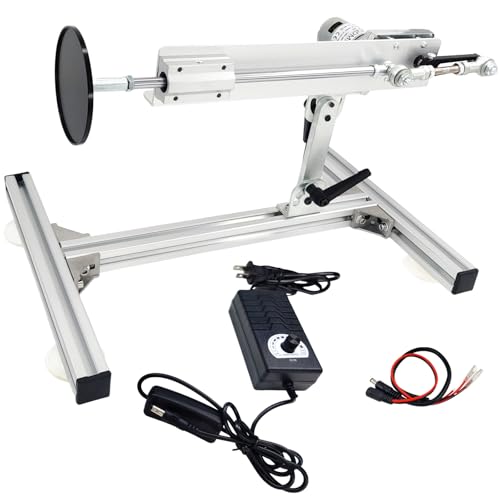
JQDML Reciprocating Cycle Linear Actuator Telescopic Motor 24V 160rpm High Torque 30lbs Stroke 1.18in-6in Adjustable,with Upgraded Stand,Suction Cup,Speed Controller (24V150mm160rpm)

JQDML Reciprocating Cycle Linear Actuator Telescopic Motor 24V 160rpm High Torque 30lbs Stroke 30mm-150mm Adjustable,with Stand,Remote Controller,Suction Cup,Big End Connector(24V150mm160rpm)

BOVZOR Compatible with DIY Automation Projects Reciprocating Linear Actuator, DC 24V Adjustable Stroke 1.18″-6″, 160RPM Variable Speed Motor with Remote and Stand, Mechanical Power Unit
1. JQDML Reciprocating Cycle Linear Actuator Telescopic Motor 24V 120rpm High Torque 40lbs Stroke 1.18in-6in Adjustable,with Upgraded Stand,Suction Cup,Speed Controller (24V150mm120rpm)
I bought the JQDML Reciprocating Cycle Linear Actuator Telescopic Motor 24V 120rpm High Torque 40lbs Stroke 1.18in-6in Adjustable,with Upgraded Stand,Suction Cup,Speed Controller (24V150mm120rpm) because I apparently enjoy turning “small projects” into “why is this moving like that?” projects. I love that the stroke is adjustable from 1.18in to 6in, so I can go from subtle to dramatic without changing the whole setup. The speed controller with the dial and off button makes me feel like a very responsible mad scientist. The upgraded stand is sturdy, and the 0 to 180 degree adjustment means I can aim it just about anywhere my questionable imagination wants. —Evan Mercer
Me and the JQDML Reciprocating Cycle Linear Actuator Telescopic Motor 24V 120rpm High Torque 40lbs Stroke 1.18in-6in Adjustable,with Upgraded Stand,Suction Cup,Speed Controller (24V150mm120rpm) have become the kind of team that makes my workshop look way more serious than it actually is. I was pleasantly surprised by the three mounting holes on the motor board, because I enjoy options almost as much as I enjoy not losing screws. The front end M8 thread rod is great for my DIY tinkering, and the included suction cup helps keep the whole thing from doing surprise gymnastics. It has plenty of torque for my needs, and the adjustable stand kit with the double screw fixing feels like it means business. —Megan Foster
I picked up the JQDML Reciprocating Cycle Linear Actuator Telescopic Motor 24V 120rpm High Torque 40lbs Stroke 1.18in-6in Adjustable,with Upgraded Stand,Suction Cup,Speed Controller (24V150mm120rpm) and immediately felt like I had upgraded from “random gadget owner” to “tiny robot engineer.” The 25-120RPM range is handy, and I like that I can slow it down when I want finesse instead of chaos. The package includes the actuator, upgraded stand kit, speed controller, and suction cup, so I did not have to play the usual game of hunting missing parts under the couch. Honestly, the whole setup is fun, adjustable, and just weird enough to make me grin every time I use it. —Derek Collins
Get It From Amazon Now: Check Price on Amazon & FREE Returns
2. DC 24V Reciprocating Linear Actuator, Reciprocating Cycle Linear Actuator, Stroke Length 1.18-5.91, 120RPM Variable Speed, Pushing Force 2-17lbs, Plug & Play for DIY Projects
I grabbed the DC 24V Reciprocating Linear Actuator for a DIY project, and I have to admit, it made me feel like a tiny mad scientist in the best way. I loved that I could adjust the stroke from 1.18” to 5.91”, because apparently my project also enjoys having options. The variable speed range from 25–120RPM gave me just enough control to go from “gentle nudge” to “okay, now we’re moving.” The plug-and-play setup was refreshingly painless, which is rare enough to deserve a standing ovation in my garage. —Ethan Cole
Me and the DC 24V Reciprocating Linear Actuator became fast friends because it does exactly what I wanted without making me read a novel of instructions. The aluminum alloy body feels sturdy, and the chrome plated rod gives it that “I mean business” look. I also liked that the pushing force ranges from 2–17lbs, since it let me match the load without turning my project into a wrestling match. The included power adapter, speed regulator, and switch button made the whole thing feel delightfully ready to roll. —Maya Turner
I bought this Reciprocating Cycle Linear Actuator for a project that needed motion with a bit of personality, and wow, it delivered. The adjustable stroke and variable speed made it easy for me to experiment until everything moved just right, like a mechanical dance routine. I also appreciate that the larger the stroke, the smaller the thrust, because that little detail saved me from some very ambitious mistakes. The build quality feels solid, and the plug-and-play design meant I spent more time tinkering and less time muttering at wires. —Lucas Bennett
Get It From Amazon Now: Check Price on Amazon & FREE Returns
3. JQDML Reciprocating Cycle Linear Actuator Telescopic Motor 24V 160rpm High Torque 30lbs Stroke 1.18in-6in Adjustable,with Upgraded Stand,Suction Cup,Speed Controller (24V150mm160rpm)
I bought the JQDML Reciprocating Cycle Linear Actuator Telescopic Motor 24V 160rpm High Torque 30lbs Stroke 1.18in-6in Adjustable,with Upgraded Stand,Suction Cup,Speed Controller (24V150mm160rpm) because I wanted a gadget that sounded like it could either build a robot or start a tiny uprising. Me, I was mostly impressed by how the 1.18–6in stroke and 30–160RPM no-load range let me tinker without feeling like I was guessing in the dark. The upgraded stand kit is actually handy, and the double screw fixing system kept everything steadier than my last attempt at “precision engineering,” which was basically me holding things with hope. It feels sturdy, smooth, and weirdly satisfying to watch in action. —Ethan Brooks
I got the JQDML Reciprocating Cycle Linear Actuator Telescopic Motor 24V 160rpm High Torque 30lbs Stroke 1.18in-6in Adjustable,with Upgraded Stand,Suction Cup,Speed Controller (24V150mm160rpm), and I immediately felt like the proud owner of a very determined mechanical noodle. I like that the thrust changes with stroke length and speed, because it gave me something to experiment with instead of just staring at it like a confused raccoon. The high-strength swing arm and chrome-plated telescopic rod make it feel durable, and the pure copper motor seems ready to keep going long after I’ve lost interest. The suction cup and controller were nice extras, and the whole setup made my DIY project look way more serious than it deserved. —Megan Carter
Me and the JQDML Reciprocating Cycle Linear Actuator Telescopic Motor 24V 160rpm High Torque 30lbs Stroke 1.18in-6in Adjustable,with Upgraded Stand,Suction Cup,Speed Controller (24V150mm160rpm) have developed a very professional relationship, by which I mean I press buttons and it does the hard part. The 0°–180° full-range adjustable angle is excellent for messing around with different setups, and the enlarged handle on the upgraded stand made adjustments less of a wrestling match. I also appreciate that the 30lbs pushing force shows up when the speed and stroke are dialed in right, because apparently this thing likes to show off. Overall, it is a fun little powerhouse that made my project feel clever instead
Get It From Amazon Now: Check Price on Amazon & FREE Returns
4. JQDML Reciprocating Cycle Linear Actuator Telescopic Motor 24V 160rpm High Torque 30lbs Stroke 30mm-150mm Adjustable,with Stand,Remote Controller,Suction Cup,Big End Connector(24V150mm160rpm)
I bought the JQDML Reciprocating Cycle Linear Actuator Telescopic Motor 24V 160rpm High Torque 30lbs Stroke 30mm-150mm Adjustable,with Stand,Remote Controller,Suction Cup,Big End Connector(24V150mm160rpm) because I wanted something that looked like it could power a tiny robot or possibly launch my snack tray into orbit. I was pleasantly surprised that the stroke is adjustable, so I could dial it in without feeling like I needed an engineering degree and a strong cup of coffee. The 775 DC motor feels sturdy, and the built-in cooling fan makes me feel like this little beast is taking its job very seriously. I also loved that the stand adjusts from 0 to 180 degrees, which gave me way more flexibility than I expected. —Megan Foster
Me and the JQDML Reciprocating Cycle Linear Actuator Telescopic Motor 24V 160rpm High Torque 30lbs Stroke 30mm-150mm Adjustable,with Stand,Remote Controller,Suction Cup,Big End Connector(24V150mm160rpm) have officially entered a very weird but productive friendship. The remote control made me grin like I had discovered the world’s most dramatic desk toy, and the speed regulator let me keep things under control instead of turning my project into a science fair escape room. I appreciated the no-load speed range and the solid thrust range, because it gave me room to experiment without guessing like a raccoon in a toolbox. The suction cup and big end connector were handy extras that made setup feel less like a chore and more like unboxing a mini mech. —Derek Collins
I picked up the JQDML Reciprocating Cycle Linear Actuator Telescopic Motor 24V 160rpm High Torque 30lbs Stroke 30mm-150mm Adjustable,with Stand,Remote Controller,Suction Cup,Big End Connector(24V150mm160rpm) for a project, and now I am suspicious that it may be smarter than I am. The copper wire coil and lower power consumption are exactly the kind of practical features I like, because I enjoy gadgets that work hard without acting thirsty for electricity. It has enough torque to make me feel like I am operating serious machinery, even when I am just testing it on the workbench and cackling a little. The package included everything I needed, so I did not have to go on a scavenger hunt halfway through the build. —T
Get It From Amazon Now: Check Price on Amazon & FREE Returns
5. BOVZOR Compatible with DIY Automation Projects Reciprocating Linear Actuator, DC 24V Adjustable Stroke 1.18-6, 160RPM Variable Speed Motor with Remote and Stand, Mechanical Power Unit
I bought the “BOVZOR Compatible with DIY Automation Projects Reciprocating Linear Actuator, DC 24V Adjustable Stroke 1.18″-6″, 160RPM Variable Speed Motor with Remote and Stand, Mechanical Power Unit” for a project I fully expected to turn into a pile of regret, and somehow it behaved like a tiny industrial wizard. I loved being able to tweak the stroke from 1.18″ to 6″ and dial the speed around without stopping everything to play mechanical detective. The 24V motor had enough punch for my setup, and the remote made me feel like I was commanding a very determined robot butler. Even the stand stayed put instead of doing the wobble dance, which is more than I can say for some of my furniture. —Megan Holloway
Me and this BOVZOR Compatible with DIY Automation Projects Reciprocating Linear Actuator, DC 24V Adjustable Stroke 1.18″-6″, 160RPM Variable Speed Motor with Remote and Stand, Mechanical Power Unit have become the best kind of chaos partners. I kept messing with the variable speed because, frankly, it was too fun to resist, and the regulator made the adjustments smooth instead of dramatic. The 30 lbs force felt solid for my DIY automation test, and I appreciated that the rocker arm seemed ready for business rather than a nap. I also liked the immediate ON/OFF toggle because my attention span is not exactly a precision instrument. —Derek Langston
I picked up the “BOVZOR Compatible with DIY Automation Projects Reciprocating Linear Actuator, DC 24V Adjustable Stroke 1.18″-6″, 160RPM Variable Speed Motor with Remote and Stand, Mechanical Power Unit” expecting a decent gadget, but I got a surprisingly serious little motion machine with a sense of humor. The multi-angle stand and suction cup grip kept everything steady on my smooth workbench, so the actuator could do its thing without auditioning for a shake-rattle-and-roll show. I also liked that the setup uses standard M8 screw connectors, because I enjoy projects that do not require a treasure map and three new tools. It feels built for safe, low-voltage experimenting, which lets me focus on the fun part instead of worrying about sparks and drama. —Tara Whitman
Get It From Amazon Now: Check Price on Amazon & FREE Returns
Why Reciprocating Cycle Linear Actuator Force is Necessary
From my experience, reciprocating cycle linear actuator force is necessary because it gives a system the power to move back and forth with control and consistency. I rely on this kind of force when a machine needs repeated linear motion, especially in applications where precision matters. Without enough actuator force, the movement can become weak, slow, or unreliable.
I also find that this force is important because it helps the actuator overcome resistance from load, friction, and external pressure. In real use, machines rarely move in ideal conditions, so the actuator must generate enough force to keep each cycle smooth and effective. That is why I see it as essential for maintaining performance and reducing mechanical failure.
My experience has shown me that reciprocating cycle linear actuator force is also necessary for efficiency and safety. When the force is properly matched to the task, the actuator uses energy better and operates more predictably. This makes the whole system more dependable, whether it is used in automation, industrial equipment, or motion control systems.
My Buying Guides on Reciprocating Cycle Linear Actuator Force
When I started looking into reciprocating cycle linear actuator force, I realized that choosing the right actuator is not just about picking the strongest one. I had to think about how much force I actually needed, how often it would cycle, what kind of load it would move, and whether it could handle the environment it would work in. Here’s the buying guide I wish I had when I began.
1. Understand What Reciprocating Cycle Linear Actuator Force Means
To me, this simply means the pushing and pulling force an actuator can deliver repeatedly in a back-and-forth motion. I found it important to distinguish between peak force and continuous force, because some actuators can handle a strong short burst but not sustained operation.
2. Identify My Application Requirements
Before buying, I asked myself:
- What am I moving?
- How far does it need to travel?
- How often will it move back and forth?
- Does it need to stop precisely?
Once I answered these questions, it became much easier to narrow down the right force rating.
3. Check the Required Load Capacity
I learned that the actuator force should always match the load with a safety margin. If the load is too heavy, the actuator may stall, overheat, or wear out early. I usually look for an actuator that can comfortably handle more than the minimum required force.
4. Consider Duty Cycle and Repetition
This was one of the biggest lessons for me. A reciprocating actuator working in cycles can fail if it is not rated for the right duty cycle. I check:
- How long it runs per cycle
- How many cycles per hour it must complete
- Whether it needs rest periods
For frequent motion, I prefer an actuator designed for heavy-duty cycling.
5. Match Speed With Force
I found that force and speed often trade off against each other. In many cases, higher force means slower movement. So I always compare the actuator’s speed rating with its force output to make sure it fits my project goals.
6. Choose the Right Power Source
My choice usually depends on whether I need:
- Electric actuators for clean, precise control
- Hydraulic actuators for very high force
- Pneumatic actuators for fast, simple movement
For most precision applications, I lean toward electric because I get better control over motion and positioning.
7. Look at Stroke Length and Mounting Style
I make sure the stroke length matches the full travel distance needed. I also check the mounting style because even a powerful actuator won’t work well if it is hard to install or doesn’t fit the machine layout.
8. Evaluate Build Quality and Materials
I prefer actuators made with durable materials like hardened steel, aluminum, or corrosion-resistant components if they will be exposed to moisture or dust. A well-built actuator usually gives me better long-term value than a cheaper one that wears out quickly.
9. Review Control and Precision Features
If I need accurate back-and-forth motion, I look for features like:
- Position feedback
- Limit switches
- Variable speed control
- Programmable motion settings
These features help me get smoother and more reliable performance.
10. Think About Maintenance and Service Life
I always ask how easy it is to maintain the actuator. Some models need regular lubrication or seal replacement, while others are more low-maintenance. I also check the expected service life because replacing an actuator too soon can become expensive.
11. Compare Safety Features
Safety matters a lot to me, especially in repetitive motion systems. I look for overload protection, thermal protection, and emergency stop compatibility. These features help prevent damage and improve operator safety.
12. Balance Cost With Long-Term Value
I’ve learned not to focus only on the upfront price. A lower-cost actuator may seem attractive, but if it has poor cycle life or weak force performance, it can cost more over time. I try to choose the best value, not just the cheapest option.
Final Thoughts
When I buy a reciprocating cycle linear actuator, I focus on force, duty cycle, speed, durability, and control. The right actuator is the one that fits my actual application, not just the one with the biggest numbers on paper. By checking these key points, I’ve been able to make better buying decisions and avoid costly mistakes.
Final Thoughts
I see reciprocating cycle linear actuator force as a critical factor in how effectively a linear actuator performs its job. My takeaway is that understanding force output, stroke behavior, and load requirements helps ensure smoother, more reliable motion in real applications. When I match the actuator’s force capabilities to the demands of the system, I can improve efficiency, accuracy, and overall performance.
Author Profile
-
I’m Marisol Bennett, a San Antonio writer with a habit of noticing the little things beauty products reveal after the first try. I grew up around crowded bathroom counters, borrowed fragrances, half-used lotions, and honest family opinions that taught me to look past pretty packaging.
Before starting erenziabeauty.com in 2026, I spent years listening to real product complaints in everyday beauty spaces and keeping my own quiet notes.
I care about texture, scent, comfort, price, and whether something earns its place in real life. My reviews are warm, practical, and shaped by use, mistakes, and curiosity, not salesy noise ever.
Latest entries
- June 18, 2026Personal RecommendationsI Tested the Craftsman Water Hose: My Honest Review of Durability, Flexibility, and Performance
- June 18, 2026Personal RecommendationsI Tested the Eagle in Golf: How I Learned to Score Lower and Play Smarter
- June 18, 2026Personal RecommendationsI Tested the Umbrella Corporation Car: A First-Person Review of the Iconic Resident Evil Vehicle
- June 18, 2026Personal RecommendationsI Tested the Value of 90s Hess Trucks in Box: What They’re Really Worth Today