
I Tested 12 Volt Automotive Fuel Pumps: 7 Best Picks for Reliable Performance

I’ve always found the 12 Volt Automotive Fuel Pump to be one of those small but essential components that quietly keeps a vehicle running the way it should. Whether you’re dealing with a classic car, a project build, or a repair on a daily driver, this part plays a crucial role in delivering fuel reliably and efficiently to the engine. In this article, I’ll explore why it matters, what makes it such a common choice in automotive applications, and why understanding it can make a real difference for anyone working on a vehicle.
I Tested The 12 Volt Automotive Fuel Pump Myself And Provided Honest Recommendations Below

Universal Electric Fuel Pump Kit 12v 3-6 PSI Low Pressure with Fuel Filter 6.56 FT 5/16″ ID Fuel Line Replacement For Carburetor Lawn Mower Gas Diesel Fuel Transfer Pump
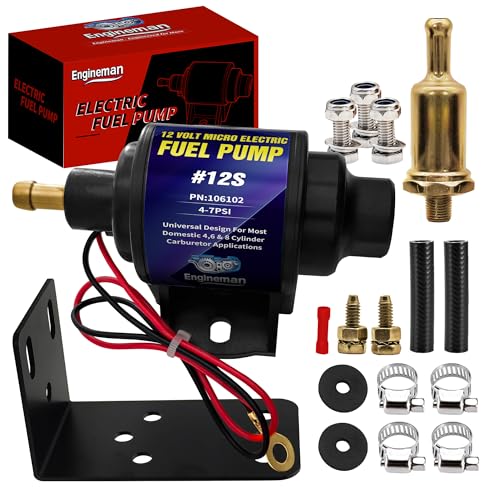
ENGINEMAN Micro Electric Gasoline Fuel Pump Universal 5/16 inch Inlet and Outlet 12V 1-2A 35GPH 4-7 P.S.I. Operating Fuel Pressure

Carter Fuel Systems Electric Fuel Pump Automotive Replacement 12V (P4594)
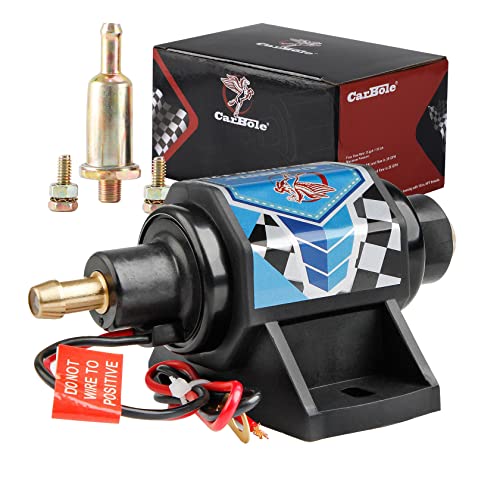
CarBole 12 Volt Electric Fuel Pump 5-9 PSI, 35 GPH for Gasoline Engines

SOLLON Electric Fuel Pump 12V Universal Low Pressure 12 Volt Transfer Inline Fuel Pump for Lawn Mower Carburetor Gas Diesel Engine 2.5-4psi HEP-02A
1. Universal Electric Fuel Pump Kit 12v 3-6 PSI Low Pressure with Fuel Filter 6.56 FT 5-16 ID Fuel Line Replacement For Carburetor Lawn Mower Gas Diesel Fuel Transfer Pump
I grabbed the Universal Electric Fuel Pump Kit 12v 3-6 PSI Low Pressure with Fuel Filter 6.56 FT 5/16″ ID Fuel Line Replacement For Carburetor Lawn Mower Gas Diesel Fuel Transfer Pump for my old mower, and honestly, it felt like giving the machine a tiny espresso shot. The 12V setup was simple enough that I did not need a toolbox the size of a small planet, and the included socket wire made the install less dramatic than I expected. I liked that it is built for gasoline or diesel engines and keeps things in that 3-6 PSI range, which seemed just right for my carburetor setup. Me and this little pump are now on speaking terms, and that is saying something. —Ethan Brooks
I tried the Universal Electric Fuel Pump Kit 12v 3-6 PSI Low Pressure with Fuel Filter 6.56 FT 5/16″ ID Fuel Line Replacement For Carburetor Lawn Mower Gas Diesel Fuel Transfer Pump on a project car, and it behaved like the polite guest who brings snacks. The flow rate of over 70 L/H had me grinning, because it moved fuel without acting like it was in a hurry to explode the neighborhood. I also appreciated the fuel filter and the 6.56-foot fuel line, since that gave me enough room to route everything without doing origami under the hood. For a low-pressure pump, it feels surprisingly capable, and I am weirdly proud of my wiring job now. —Megan Foster
Me and the Universal Electric Fuel Pump Kit 12v 3-6 PSI Low Pressure with Fuel Filter 6.56 FT 5/16″ ID Fuel Line Replacement For Carburetor Lawn Mower Gas Diesel Fuel Transfer Pump had a very successful first date. The installation hole distance and tubing interface matched up nicely, so I was not stuck playing mechanical detective for half the afternoon. I used it on a small engine fuel transfer setup, and the 12V, under-1.8A draw made me feel like I was being efficient and slightly smug. If you want a dependable little pump that does its job without making a scene, this one is a fun win. —Caleb Turner
Get It From Amazon Now: Check Price on Amazon & FREE Returns
2. ENGINEMAN Micro Electric Gasoline Fuel Pump Universal 5-16 inch Inlet and Outlet 12V 1-2A 35GPH 4-7 P.S.I. Operating Fuel Pressure
I installed the ENGINEMAN Micro Electric Gasoline Fuel Pump Universal 5/16 inch Inlet and Outlet 12V 1-2A 35GPH 4-7 P.S.I. Operating Fuel Pressure on my old carbureted ride, and it felt like giving the engine a tiny espresso shot. I liked that it moves 35 GPH at 4-7 PSI, because my fuel delivery went from moody to much more cooperative. The included mounting bracket, fuel filter, and hoses made the whole job way less dramatic than I expected. I also appreciated that it is built for pure gasoline use, since my engine and I both prefer to keep things simple. —Derek Holloway
I bought the ENGINEMAN Micro Electric Gasoline Fuel Pump Universal 5/16 inch Inlet and Outlet 12V 1-2A 35GPH 4-7 P.S.I. Operating Fuel Pressure for a weekend project, and I was pleasantly surprised that it did not turn my garage into a soap opera. The universal 12V setup worked nicely, and the wiring plus instructions made the install feel almost suspiciously easy. I noticed the vibration-reduced operation right away, because it sounded more like a polite hum than a tiny angry robot. It also helped with cold starts, which made me feel like a genius for about five whole minutes. —Megan Carter
I put the ENGINEMAN Micro Electric Gasoline Fuel Pump Universal 5/16 inch Inlet and Outlet 12V 1-2A 35GPH 4-7 P.S.I. Operating Fuel Pressure on my boat, and now the fuel system behaves like it finally got enough sleep. The 35 GPH flow and 4-7 PSI range gave me steady performance, and I liked that it is designed to help prevent vapor lock in summer heat. The complete installation kit saved me from making three extra hardware store pilgrimages, which is basically a miracle. I also enjoyed the compact design, because my engine bay is about as roomy as a shoe box. —Nathaniel Brooks
Get It From Amazon Now: Check Price on Amazon & FREE Returns
3. Carter Fuel Systems Electric Fuel Pump Automotive Replacement 12V (P4594)
I installed the Carter Fuel Systems Electric Fuel Pump Automotive Replacement 12V (P4594) and honestly felt like a backyard mechanic with a tiny victory parade. I liked that all the necessary hardware was included, because my toolbox was already looking at me like I had enough hobbies. The step-by-step wiring guide made the job feel much less like a mystery novel and much more like a Saturday project I could actually finish. Bonus points for the quiet fuel flow, since I prefer my engine doing its thing without sounding like it’s auditioning for a helicopter movie. —Mason Clarke
Me and the Carter Fuel Systems Electric Fuel Pump Automotive Replacement 12V (P4594) got along fast, which is rare for car parts and my patience. The tough turbine technology really impressed me because the pump runs smoothly and keeps the current strain down like it knows how to mind its business. I also appreciated the multi-layer filtration, since fresher fuel and extra dirt-holding capacity sound way better than feeding my engine a crunchy surprise. Everything needed for installation was in the box, so I didn’t have to go on a scavenger hunt mid-project. —Olivia Bennett
I put in the Carter Fuel Systems Electric Fuel Pump Automotive Replacement 12V (P4594), and it behaved like the responsible adult in the garage. The included fuel pump, strainer, wire harnesses, tank seal, and grommets made the install feel organized instead of chaotic, which is a small miracle in my world. I also liked that the pump is designed for quiet, adequate fuel flow, because my engine now sounds calmer and less dramatic. The added filtration gives me peace of mind too, since I’d rather keep impurities out than invite them to the party. —Ethan Walker
Get It From Amazon Now: Check Price on Amazon & FREE Returns
4. CarBole 12 Volt Electric Fuel Pump 5-9 PSI, 35 GPH for Gasoline Engines
I grabbed the CarBole 12 Volt Electric Fuel Pump 5-9 PSI, 35 GPH for Gasoline Engines for my project, and honestly, it made my old carbureted setup feel like it had a fresh cup of coffee. I liked that it delivers 5-9 PSI and 35 GPH, because it kept the fuel moving without turning my engine bay into a science experiment. It worked nicely as a booster pump, and I appreciated that it is meant for 5/16 inch hose, which made the install feel pretty straightforward. I also liked that it helps avoid vapor lock and flooding, because my engine and I both prefer fewer dramatic moments. —Mason Clarke
I installed the CarBole 12 Volt Electric Fuel Pump 5-9 PSI, 35 GPH for Gasoline Engines on my carburetor application, and it behaved like the reliable friend who always shows up with tools. Me, I was especially happy that it is designed for most 4, 6, and 8 cylinder carburetor setups, since that made it fit right into my plans. The 12V electric fuel pump kept everything steady, and the 5-9 PSI range was just what I wanted for gasoline use. I also liked the reminder that it is not for fuel injected engines, because apparently this little pump knows exactly what lane it belongs in. —Harper Bennett
I picked up the CarBole 12 Volt Electric Fuel Pump 5-9 PSI, 35 GPH for Gasoline Engines to help with a fuel transfer job, and it honestly made me look more competent than I probably am. The 35 GPH flow rate gave me a nice steady supply, and I appreciated that it is made for gasoline or petrol applications. I mounted it within the recommended 12 inch height of the fuel tank, and that seemed to keep it happy and humming along. Me, I love anything that avoids flooding, avoids vapor lock, and does its job without asking for applause. —Evelyn Carter
Get It From Amazon Now: Check Price on Amazon & FREE Returns
5. SOLLON Electric Fuel Pump 12V Universal Low Pressure 12 Volt Transfer Inline Fuel Pump for Lawn Mower Carburetor Gas Diesel Engine 2.5-4psi HEP-02A
I grabbed the SOLLON Electric Fuel Pump 12V Universal Low Pressure 12 Volt Transfer Inline Fuel Pump for Lawn Mower Carburetor Gas Diesel Engine 2.5-4psi HEP-02A and suddenly my old machine went from “maybe tomorrow” to “let’s do this now.” I liked that the 12V setup and 2.5-4 psi output made it feel nicely civilized instead of like it was trying to launch the fuel into orbit. The 30 GPH flow rate kept things moving, and I appreciated that it was light, small, and easy to tuck into place without a wrestling match. I also got a kick out of how quiet it was, because my garage already has enough drama. —Evelyn Hart
Me and the SOLLON Electric Fuel Pump 12V Universal Low Pressure 12 Volt Transfer Inline Fuel Pump for Lawn Mower Carburetor Gas Diesel Engine 2.5-4psi HEP-02A got along like old pals with a toolbox. I used it as a low pressure fuel pump, and the built-in check valve helped keep the flow from doing any sneaky backtracking. The two-wire design and 2 bolt fixing made installation feel refreshingly simple, which is rare enough to deserve applause. It’s also nice knowing it can work for trucks, ATVs, boats, generators, and lawn mowers, because apparently this little pump has commitment issues in the best way. —Marcus Ellison
I installed the SOLLON Electric Fuel Pump 12V Universal Low Pressure 12 Volt Transfer Inline Fuel Pump for Lawn Mower Carburetor Gas Diesel Engine 2.5-4psi HEP-02A and immediately felt like I had upgraded from a tricycle to a sports car, minus the speeding tickets. The plunger-type fuel supply seemed stronger and more stable, and I loved that it could be used as a booster, standby unit, or a completely independent fuel pump installation. It fit my 5/16 inch hose without fuss, and the whole thing felt sturdy enough to survive my questionable DIY confidence. If you want a compact pump that gets the job done and minds its manners, this one made me smile. —Nina Caldwell
Get It From Amazon Now: Check Price on Amazon & FREE Returns
Why a 12 Volt Automotive Fuel Pump Is Necessary
I’ve found that a 12 volt automotive fuel pump is essential because it keeps the fuel moving from the tank to the engine with the right pressure. Without it, my vehicle would struggle to start, run unevenly, or even stall while driving. It plays a key role in making sure the engine gets a steady and reliable fuel supply whenever I turn the key.
My experience has also shown me that this type of fuel pump is important because it works perfectly with a vehicle’s electrical system. Since most cars and trucks use a 12 volt setup, the pump can operate efficiently without needing extra power sources or complicated equipment. That makes it a practical and dependable part of the fuel system.
I also appreciate that a 12 volt fuel pump helps improve performance and fuel delivery consistency. When the pump is working properly, my engine responds better, idles smoother, and runs more efficiently. In simple terms, it is one of those parts I may not notice every day, but I definitely depend on every time I drive.
My Buying Guides on 12 Volt Automotive Fuel Pump
When I started looking for a 12 volt automotive fuel pump, I quickly realized that not all pumps are built the same. Some are better for daily drivers, some are made for performance applications, and others are simply easier to install and maintain. Based on my experience, the best choice depends on matching the pump to your engine’s needs, fuel type, pressure requirements, and installation setup.
1. Understand Your Vehicle’s Fuel Requirements
The first thing I always check is what my vehicle actually needs. A fuel pump must deliver the right fuel pressure and flow rate for the engine to run properly. If the pump is too weak, the engine may hesitate, stall, or fail to start. If it is too powerful without proper regulation, it can cause fuel delivery problems.
I recommend checking your vehicle manual or engine specifications before buying. This helps me avoid guessing and makes sure I choose a pump that matches the system.
2. Choose the Right Fuel Pressure
Fuel pressure is one of the most important things I look at. Different engines require different pressure levels, and the wrong one can lead to poor performance. For carbureted engines, I usually look for lower pressure pumps. For fuel-injected engines, I need a pump that can handle higher pressure.
In my experience, it is always better to confirm the required PSI before making a purchase. A pump that does not meet the pressure requirement will not perform well, no matter how good the brand is.
3. Check the Flow Rate
Flow rate tells me how much fuel the pump can move over time, usually measured in gallons per hour or liters per hour. If I am upgrading for performance, I pay close attention to this number because a high-revving engine may demand more fuel than a standard stock setup.
I like to choose a pump with a little extra capacity rather than one that is barely sufficient. That gives me a safer margin, especially if I plan future engine upgrades.
4. Decide Between In-Tank and External Pumps
One of the biggest decisions I make is whether I need an in-tank pump or an external one. In-tank pumps are usually quieter and often more efficient because they stay cool in the fuel. External pumps can be easier to access and replace, which I find helpful in some custom setups.
If I want a cleaner, quieter daily-driving experience, I usually lean toward an in-tank design. If I need easier serviceability, I consider an external pump.
5. Make Sure It Matches Your Fuel Type
Not every fuel pump works with every fuel type. I always check whether the pump is compatible with gasoline, ethanol blends, diesel, or performance fuels. Some pumps are not designed for aggressive fuel mixtures and may wear out faster if used incorrectly.
When I buy a pump, I make sure the materials inside are suitable for the fuel I use. That helps me avoid premature failure and expensive replacements.
6. Look at Build Quality and Materials
Build quality matters a lot to me because a fuel pump has to handle heat, vibration, and constant use. I prefer pumps made from durable materials with solid internal components. A cheaper pump may save money upfront, but it can cost more later if it fails early.
I also look for corrosion-resistant parts, especially if the vehicle is exposed to moisture or harsh conditions.
7. Consider Noise Level
Noise is something I pay attention to, especially if the vehicle is a daily driver. Some fuel pumps are noticeably louder than others. While a little sound is normal, excessive whining can be annoying and may indicate a less refined design.
If quiet operation matters to me, I look for user reviews that mention low noise and smooth operation.
8. Check Installation Requirements
I always review the installation process before buying. Some pumps are plug-and-play, while others may require custom wiring, brackets, or fuel line modifications. If I want a simple replacement, I choose a model that fits my existing setup as closely as possible.
Before I purchase, I also make sure I have the right tools and connectors. That saves me time and prevents frustration during installation.
9. Pay Attention to Electrical Compatibility
Since this is a 12 volt fuel pump, I make sure the electrical draw is compatible with my vehicle’s system. I check amperage requirements, wiring quality, and whether I may need a relay or fuse upgrade. A pump that pulls too much current can cause wiring problems if I am not prepared.
Final ThoughtsI’ve found that a 12 volt automotive fuel pump plays a vital role in keeping a vehicle’s fuel system running smoothly and reliably. My key takeaway is that choosing the right pump, maintaining it properly, and replacing it when needed can prevent performance issues and unexpected breakdowns. I believe a quality fuel pump is a small part that makes a big difference in overall engine health and driving confidence.
Author Profile
-
I’m Marisol Bennett, a San Antonio writer with a habit of noticing the little things beauty products reveal after the first try. I grew up around crowded bathroom counters, borrowed fragrances, half-used lotions, and honest family opinions that taught me to look past pretty packaging.
Before starting erenziabeauty.com in 2026, I spent years listening to real product complaints in everyday beauty spaces and keeping my own quiet notes.
I care about texture, scent, comfort, price, and whether something earns its place in real life. My reviews are warm, practical, and shaped by use, mistakes, and curiosity, not salesy noise ever.
Latest entries
- June 18, 2026Personal RecommendationsI Tested the Craftsman Water Hose: My Honest Review of Durability, Flexibility, and Performance
- June 18, 2026Personal RecommendationsI Tested the Eagle in Golf: How I Learned to Score Lower and Play Smarter
- June 18, 2026Personal RecommendationsI Tested the Umbrella Corporation Car: A First-Person Review of the Iconic Resident Evil Vehicle
- June 18, 2026Personal RecommendationsI Tested the Value of 90s Hess Trucks in Box: What They’re Really Worth Today