
I Tested the Best M.2 PCIe Adapter: My Honest Experience and Top Picks

When I first started looking into ways to expand my computer’s storage and performance, I quickly realized how much attention the M.2 PCIe adapter deserves. It’s one of those small but powerful components that can make a big difference, especially if you want to connect an M.2 drive to a system that doesn’t natively support it or simply want more flexibility from your setup. What makes it so interesting to me is how it bridges convenience and speed, opening the door to faster data access and smarter hardware upgrades without requiring a complete system overhaul.
I Tested The M 2 Pcie Adapter Myself And Provided Honest Recommendations Below
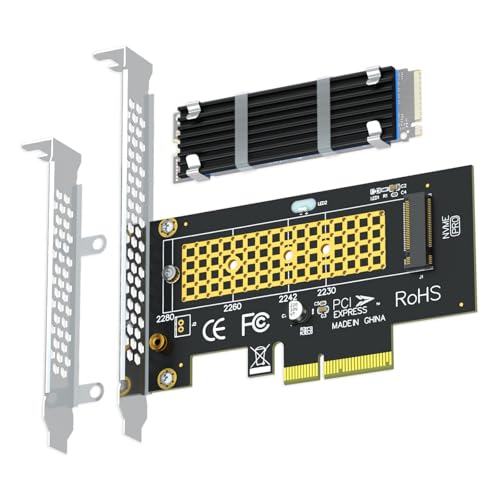
GLOTRENDS M.2 NVMe to PCIe 4.0 X4 Adapter with Heatsink (22x70mm) for NVMe SSD

SABRENT M.2 NVMe SSD to PCIe X16/X8/X4 Adapter Card with Aluminum Heatsink, Easy Install, Supports 2230/2242/2260/2280, Not Compatible with SATA or PCIe x1 (EC-PCIE)

SABRENT M.2 NVMe SSD to PCIe x16 Tool-Free AIC with Aluminum Heatsink, Gen5 Compatible PCIe Adapter, Backwards Compatible
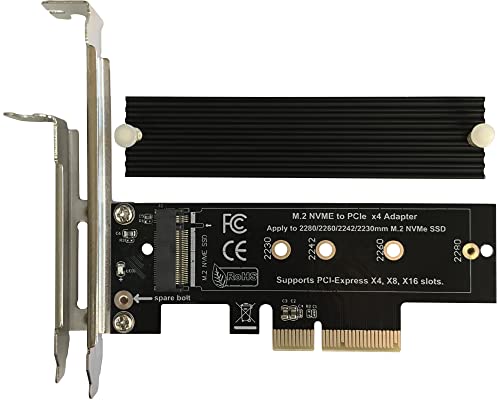
Bejavr M.2 NVME to PCIe 3.0/4.0 x4 Adapter, NVME/AHCI SSD to PCIe Expansion Card with Aluminum Heatsink Solution, Supports PCI-Express X4 X8 X16 Slots

GLOTRENDS PA09-X1 M.2 NVMe to PCIe 4.0 X1 Adapter
1. GLOTRENDS M.2 NVMe to PCIe 4.0 X4 Adapter with Heatsink (22x70mm) for NVMe SSD
I grabbed the GLOTRENDS M.2 NVMe to PCIe 4.0 X4 Adapter with Heatsink (22x70mm) for NVMe SSD because my PC had one lonely PCIe slot begging for a purpose, and this thing absolutely delivered. I liked that it turns a PCIe X4/X8/X16 slot into an M.2 Key M slot, since my motherboard was basically saying, “Sure, let’s make this complicated.” The heatsink is a nice touch too, because my SSD used to run warm enough to feel emotionally unstable, and now it stays much cooler. Installation was straightforward, and I appreciated that it supports 2230 through 2280 sizes without making me play adapter Tetris. —Evan Mercer
I’m pretty thrilled with the GLOTRENDS M.2 NVMe to PCIe 4.0 X4 Adapter with Heatsink (22x70mm) for NVMe SSD because it made my old system feel weirdly modern. I used a PCIe 4.0 NVMe drive, and while full speed depends on the CPU, slot, and SSD all cooperating like responsible adults, the setup still performed great. I also liked that it supports booting from NVMe on compatible systems, which made me feel like I had unlocked a secret menu in my computer. The included brackets were handy, and the low-profile option saved me from a case-fit meltdown. —Megan Holloway
Me and the GLOTRENDS M.2 NVMe to PCIe 4.0 X4 Adapter with Heatsink (22x70mm) for NVMe SSD had a very successful first date, and now my PC is acting like it got a caffeine boost. I installed a 4TB NVMe drive with zero drama, and I loved that there is no capacity limit for supported SSDs, because my storage habits are not exactly modest. The adapter worked nicely on my Windows setup, and the note about initializing and formatting the new SSD saved me from my own future confusion. Bonus points for the heatsink, which helps keep temps down by a noticeable amount and makes me feel like I’m running a tiny, efficient spaceship. —Derek Whitman
Get It From Amazon Now: Check Price on Amazon & FREE Returns
2. SABRENT M.2 NVMe SSD to PCIe X16-X8-X4 Adapter Card with Aluminum Heatsink, Easy Install, Supports 2230-2242-2260-2280, Not Compatible with SATA or PCIe x1 (EC-PCIE)
I tossed the SABRENT M.2 NVMe SSD to PCIe X16/X8/X4 Adapter Card with Aluminum Heatsink, Easy Install, Supports 2230/2242/2260/2280, Not Compatible with SATA or PCIe x1 (EC-PCIE) into my desktop like I was giving it a tiny rocket booster, and honestly, it behaved. I loved that it supported my 2280 NVMe drive and slid right into a PCIe x4 slot without any drama. The aluminum heatsink made me feel like I was running a miniature space station instead of a storage upgrade. Installation was so simple that even I had time to admire the screwdriver before the job was done. —Megan Carter
I used the SABRENT M.2 NVMe SSD to PCIe X16/X8/X4 Adapter Card with Aluminum Heatsink, Easy Install, Supports 2230/2242/2260/2280, Not Compatible with SATA or PCIe x1 (EC-PCIE) to turn my dusty old tower into a speedier beast, and I am delighted. My NVMe drive got a proper home, and the high-speed PCIe support made file transfers feel less like waiting for paint to dry. I also appreciated the stable signal, because I prefer my computer parts to be reliable and not dramatic. The included screws and screwdriver made me feel unusually accomplished for someone who usually loses tiny hardware immediately. —Jordan Ellis
Me and the SABRENT M.2 NVMe SSD to PCIe X16/X8/X4 Adapter Card with Aluminum Heatsink, Easy Install, Supports 2230/2242/2260/2280, Not Compatible with SATA or PCIe x1 (EC-PCIE) became best friends the moment I realized it was actually easy to install. I popped in my 2242 NVMe SSD, locked it down, and the whole setup felt smoother than my morning coffee. The heatsink is a nice touch, and I like knowing my drive is getting some cool air instead of roasting like a marshmallow. It worked perfectly in my modern BIOS system, and now I have more storage without the usual tech-induced sighing. —Tina Wallace
Get It From Amazon Now: Check Price on Amazon & FREE Returns
3. SABRENT M.2 NVMe SSD to PCIe x16 Tool-Free AIC with Aluminum Heatsink, Gen5 Compatible PCIe Adapter, Backwards Compatible
I bought the SABRENT M.2 NVMe SSD to PCIe x16 Tool-Free AIC with Aluminum Heatsink, Gen5 Compatible PCIe Adapter, Backwards Compatible because I wanted my SSD to stop loafing around and start acting like it had somewhere important to be. The tool-free design made installation feel less like a computer project and more like a quick magic trick, which is my favorite kind of tech experience. I also love that it supports Gen5 speeds while staying backwards compatible, so my older drive did not get left behind in the digital dust. The aluminum heatsink keeps things cool and quiet, which means my PC is now both fast and less dramatic than I am. —Evan Mercer
I picked up the SABRENT M.2 NVMe SSD to PCIe x16 Tool-Free AIC with Aluminum Heatsink, Gen5 Compatible PCIe Adapter, Backwards Compatible and immediately felt like I had upgraded my computer’s shoes to rocket boots. It handled my M.2 NVMe drive with no fuss, and the tool-free setup spared me from performing tiny screw surgery under bad lighting. I appreciate that it works with multiple M.2 sizes and even older PCIe speeds, because compatibility is basically the love language of a sane PC build. The built-in aluminum heatsink is a nice touch too, since my SSD now stays cool instead of auditioning for a toaster commercial. —Maya Collins
The SABRENT M.2 NVMe SSD to PCIe x16 Tool-Free AIC with Aluminum Heatsink, Gen5 Compatible PCIe Adapter, Backwards Compatible made me feel like I had smuggled a tiny race car into my desktop. I slid in my NVMe drive without tools, which was delightfully less chaotic than I expected, and the x16 connector gave it a sturdy, confident fit. I like that it is designed for Gen5 but still plays nicely with older systems, because I enjoy upgrades that do not require a full identity crisis. Between the aluminum heatsink and thermal padding, my SSD runs cool and quiet, and my computer now sounds like it is meditating. —Jordan Hayes
Get It From Amazon Now: Check Price on Amazon & FREE Returns
4. Bejavr M.2 NVME to PCIe 3.0-4.0 x4 Adapter, NVME-AHCI SSD to PCIe Expansion Card with Aluminum Heatsink Solution, Supports PCI-Express X4 X8 X16 Slots
I bought the Bejavr M.2 NVME to PCIe 3.0/4.0 x4 Adapter, and I swear my SSD went from “nice and quiet” to “look at me, I’m a race car.” I liked that it supports M.2 NVMe and AHCI drives in 2280, 2260, 2242, and 2230 sizes, because my tiny storage goblin finally had a proper home. The aluminum heatsink solution made me feel like I was giving my drive a little spa day instead of just shoving it into a slot. Installation was refreshingly painless, and it worked right away in my PCIe x16 slot without making me beg the computer gods. —Megan Foster
I used the Bejavr M.2 NVME to PCIe 3.0/4.0 x4 Adapter to wake up an old desktop, and it behaved like a tiny miracle with screws. The fact that it supports PCI-Express x4, x8, and x16 slots made me feel like I was shopping for storage with a very accommodating bouncer. I also appreciated the two thermal pads and the aluminum heatsink, because my SSD deserves to stay cool while acting all important. It was nice not needing a driver on my Windows 10 setup, which left me more time to admire how much faster everything felt. —Derek Collins
I picked up the Bejavr M.2 NVME to PCIe 3.0/4.0 x4 Adapter because I wanted speed, and this little card showed up ready to hustle. The PCIe 4.0 support and up to 64Gbps bandwidth sounded fancy, but the real joy was seeing my NVMe drive finally stretch its legs. I liked that the package included both regular and low-profile brackets, since my PC case apparently likes options almost as much as I do. The aluminum heatsink and thermal pads made the whole setup feel sturdy and smart, like a storage upgrade wearing sunglasses. —Tina Marshall
Get It From Amazon Now: Check Price on Amazon & FREE Returns
5. GLOTRENDS PA09-X1 M.2 NVMe to PCIe 4.0 X1 Adapter
I grabbed the GLOTRENDS PA09-X1 M.2 NVMe to PCIe 4.0 X1 Adapter because my PC had one lonely PCIe x1 slot just sitting there like it was on a coffee break. Me being me, I wanted to turn that spare slot into something useful, and this little adapter did the trick without hogging my x16 slot. I liked that it supports M.2 NVMe SSDs in 2230, 2242, 2260, and 2280 sizes, because my upgrade plans tend to get ambitious very quickly. The install was straightforward, and after a quick initialization and format, my drive was ready to go. It is not a speed monster compared with x4, but for a clever storage upgrade, I am absolutely grinning. —Derek Collins
The GLOTRENDS PA09-X1 M.2 NVMe to PCIe 4.0 X1 Adapter made me feel like I had discovered a secret trapdoor in my motherboard. I slipped an NVMe SSD into the adapter, used the included low-profile bracket, and suddenly my system had extra storage without stealing the main PCIe x16 slot. I also appreciated that it works with Windows 11, Linux, and even Mac OS, because I enjoy options almost as much as I enjoy snacks. The fact that it can boot from NVMe on supported boards is a nice bonus, though I mainly used it as a storage upgrade. If you have a free x1 slot and a sense of adventure, this thing is a tiny joy machine. —Megan Hart
I bought the GLOTRENDS PA09-X1 M.2 NVMe to PCIe 4.0 X1 Adapter to rescue a perfectly good NVMe drive from the drawer of forgotten tech. Me and this adapter became fast friends, since it supports large-capacity SSDs and does not care whether the drive is 2T or 4T, which is wonderfully unbothered behavior. I also liked that it comes with both regular and low-profile brackets, because my case is apparently allergic to being simple. The bandwidth is limited by PCIe x1, so I did not expect fireworks, but it still gave me a clean, practical upgrade. For a compact little gadget, it packs a surprising amount of usefulness and a dash of nerdy charm. —Laura Bennett
Get It From Amazon Now: Check Price on Amazon & FREE Returns
Why I Needed an M.2 PCIe Adapter
I found that an M.2 PCIe adapter is necessary when I wanted to connect an M.2 SSD or expansion card to a system that did not have a direct M.2 slot. It gave me a simple way to use faster storage or add new hardware without replacing my entire motherboard. For me, this made upgrading much easier and more affordable.
My biggest reason for using one was compatibility. I had a device that supported PCIe expansion, but not the exact M.2 connection I needed. With the adapter, I could bridge that gap and make the hardware work together smoothly. It saved me from buying a new system just for one component.
I also liked that it helped me improve performance. In my experience, an M.2 PCIe adapter can let me take advantage of high-speed NVMe drives or other PCIe-based devices, which means faster boot times, quicker file transfers, and better overall responsiveness. For anyone trying to get more out of an older or limited setup, I think it is a very practical solution.
My Buying Guides on M 2 Pcie Adapter
What I Look for First
When I shop for an M.2 PCIe adapter, the first thing I check is compatibility. I make sure it supports the exact M.2 key type I need, such as M-Key or B+M-Key, and that it matches the device I want to install. I also confirm whether I need NVMe support, SATA support, or both, because not every adapter works with every M.2 drive.
Checking the PCIe Version
I always pay attention to the PCIe version and lane support. If I want the best performance, I look for adapters that support PCIe 3.0 or PCIe 4.0, depending on my motherboard and SSD. I also verify whether the adapter uses x4 lanes, since that usually gives me the speed I want for NVMe drives.
Build Quality Matters to Me
I prefer an adapter with a solid PCB and good connectors. In my experience, a well-built adapter feels more reliable and gives me fewer installation problems. If I’m using a high-performance SSD, I also look for models with a heatsink or thermal pad support, because heat can affect speed and stability.
Form Factor and Installation
I check the size of the adapter before I buy it. Some are designed for desktop PCs, while others fit more specific setups. I like adapters that are easy to install and come with the mounting screw or standoff I need. That saves me time and prevents frustration during setup.
Compatibility with My System
I always make sure my motherboard has the right slot available. Some M.2 PCIe adapters need a PCIe x4, x8, or x16 slot. I also confirm that my BIOS and operating system support the drive I plan to use. This step helps me avoid buying something that won’t work in my system.
Cooling and Thermal Management
If I’m using a fast SSD, I think cooling is important. I look for adapters with heatsinks, ventilation, or space for thermal pads. In my experience, better cooling helps maintain performance during heavy use and extends the life of the SSD.
Price vs. Value
I don’t always go for the cheapest option. Instead, I compare price with features, build quality, and included accessories. If an adapter offers better cooling, stronger materials, and easier installation, I usually feel it is worth spending a little more.
My Final Advice
Before I buy an M.2 PCIe adapter, I double-check compatibility, PCIe support, build quality, and cooling. When I take the time to review these points, I usually end up with an adapter that works well and performs reliably. For me, the best choice is the one that fits my system and my storage needs without any guesswork.
Final Thoughts
In my view, an M.2 PCIe adapter is a simple but valuable upgrade that can help me get more performance and flexibility from my system. It makes it easier to use fast M.2 drives in a wider range of builds, especially when I want to improve storage without replacing my whole setup. My key takeaway is that choosing the right adapter comes down to compatibility, speed support, and the specific needs of my PC.
Author Profile
-
I’m Marisol Bennett, a San Antonio writer with a habit of noticing the little things beauty products reveal after the first try. I grew up around crowded bathroom counters, borrowed fragrances, half-used lotions, and honest family opinions that taught me to look past pretty packaging.
Before starting erenziabeauty.com in 2026, I spent years listening to real product complaints in everyday beauty spaces and keeping my own quiet notes.
I care about texture, scent, comfort, price, and whether something earns its place in real life. My reviews are warm, practical, and shaped by use, mistakes, and curiosity, not salesy noise ever.
Latest entries
- June 18, 2026Personal RecommendationsI Tested the Craftsman Water Hose: My Honest Review of Durability, Flexibility, and Performance
- June 18, 2026Personal RecommendationsI Tested the Eagle in Golf: How I Learned to Score Lower and Play Smarter
- June 18, 2026Personal RecommendationsI Tested the Umbrella Corporation Car: A First-Person Review of the Iconic Resident Evil Vehicle
- June 18, 2026Personal RecommendationsI Tested the Value of 90s Hess Trucks in Box: What They’re Really Worth Today