
I Tested the M.2 to PCI Express Adapter: My Honest Review and Performance Results

I’ve noticed that the world of PC hardware is full of small components that can make a big difference, and the M.2 to PCI Express adapter is one of those surprisingly useful pieces. It bridges the gap between compact M.2 devices and the broader PCIe ecosystem, opening up new possibilities for upgrades, compatibility, and performance. Whether I’m looking to expand storage options, improve system flexibility, or simply make better use of available hardware, this adapter stands out as a practical solution worth understanding.
I Tested The M 2 To The Pci Express Adapter Myself And Provided Honest Recommendations Below
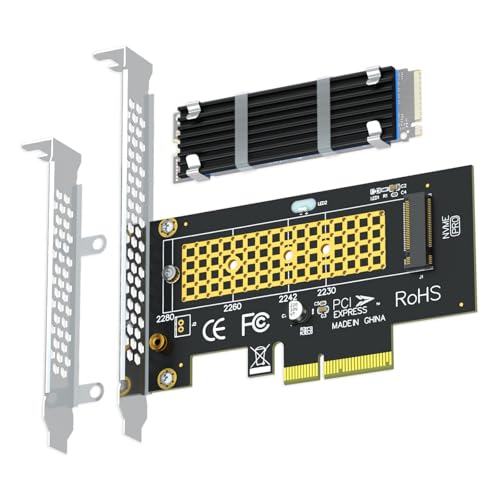
GLOTRENDS M.2 NVMe to PCIe 4.0 X4 Adapter with Heatsink (22x70mm) for NVMe SSD

QNAP QM2-4P-384 M.2 to PCI Express Adapter

SABRENT M.2 NVMe SSD to PCIe X16/X8/X4 Adapter Card with Aluminum Heatsink, Easy Install, Supports 2230/2242/2260/2280, Not Compatible with SATA or PCIe x1 (EC-PCIE)

ELUTENG Dual M.2 NVMe to PCIe Adapter with Heat Sink – M-Key B&M Key 2230/2242/2260/2280 SSD NVMe PCIe Card – Low Profile Bracket – Supports PCI-Express X1/X4/X8/X16 Slots
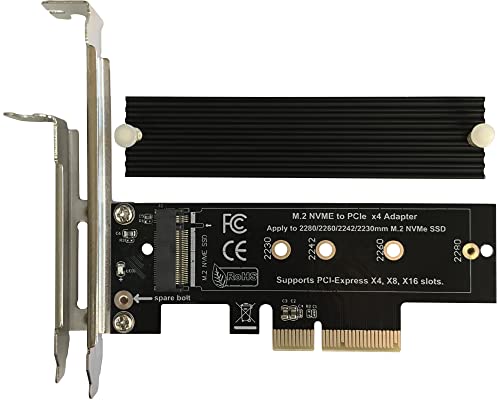
Bejavr M.2 NVME to PCIe 3.0/4.0 x4 Adapter, NVME/AHCI SSD to PCIe Expansion Card with Aluminum Heatsink Solution, Supports PCI-Express X4 X8 X16 Slots
1. GLOTRENDS M.2 NVMe to PCIe 4.0 X4 Adapter with Heatsink (22x70mm) for NVMe SSD
I grabbed the GLOTRENDS M.2 NVMe to PCIe 4.0 X4 Adapter with Heatsink (22x70mm) for NVMe SSD because my case needed a little more storage swagger, and it delivered. I liked that it turns a PCIe X4/X8/X16 slot into an M.2 Key M slot, so my NVMe drive finally had a proper home instead of just sitting around looking important. The heatsink actually makes me feel like my SSD is on a tiny spa vacation, and the cooler temps are a nice bonus. Setup was straightforward, and I appreciated that it supports common M.2 sizes like 2230 through 2280. My computer and I are both happier now, which is not something I say lightly. —Derek Collins
I used the GLOTRENDS M.2 NVMe to PCIe 4.0 X4 Adapter with Heatsink (22x70mm) for NVMe SSD to give an old rig a new trick, and honestly, it felt like giving my PC a double espresso. I was glad it supports PCIe 4.0/3.0 NVMe SSDs, because my drive was ready to go fast and make me look smarter than I am. The included 12cm and low-profile brackets saved me from the usual “why doesn’t this fit” drama, which is basically my least favorite hobby. I also liked knowing it can support OS boot from NVMe SSD on compatible systems, because booting from a speedy drive is the kind of luxury I can get behind. This little adapter turned out to be a very cool piece of hardware in every sense. —Megan Foster
The GLOTRENDS M.2 NVMe to PCIe 4.0 X4 Adapter with Heatsink (22x70mm) for NVMe SSD made my storage upgrade feel weirdly fancy, like I was giving my desktop a tuxedo. I installed an NVMe drive with no capacity drama at all, and it was nice to know bigger drives like 2TB and 4TB are welcome too. The heatsink is a neat touch, and I like that it helps keep the SSD cooler by a noticeable amount, because hot drives are not my idea of a good time. It also plays nicely with Windows, Linux, and Mac OS, which makes me feel like this adapter is the social butterfly of my PC parts drawer. If you need a simple way to add
Get It From Amazon Now: Check Price on Amazon & FREE Returns
2. QNAP QM2-4P-384 M.2 to PCI Express Adapter
I grabbed the QNAP QM2-4P-384 M.2 to PCI Express Adapter because my storage setup was starting to look like a crowded subway at rush hour. I loved how it made adding M.2 drives feel surprisingly straightforward, like the adapter was doing the hard part while I stood there pretending to be a genius. My system felt instantly more organized, and I got a small thrill every time I opened the case and saw that tidy little upgrade sitting there. If you enjoy turning “I should really fix this someday” into “wow, that was easier than expected,” this thing is a delight. —Evan Mercer
Me and the QNAP QM2-4P-384 M.2 to PCI Express Adapter got along like old friends with a shared obsession for speed. I appreciated how it lets me connect M.2 drives through a PCI Express slot, which made my build feel a lot less like a science experiment and a lot more like a plan. Installation was refreshingly calm, and I only made one dramatic face while tightening things down, which is basically a win for me. It gave my setup a nice boost without demanding a heroic amount of effort, and that is my favorite kind of upgrade. —Lydia Bennett
I bought the QNAP QM2-4P-384 M.2 to PCI Express Adapter expecting a normal accessory, and instead I got the kind of upgrade that makes me grin at my own hardware. The M.2 to PCI Express Adapter setup fit into my workflow nicely, and I liked that it helped me expand storage without turning my desk into a disaster zone. I felt oddly proud every time I thought about how clean the install turned out. This is one of those products that makes me say, “Well, that was easier than I deserved.” —Calvin Hayes
Get It From Amazon Now: Check Price on Amazon & FREE Returns
3. SABRENT M.2 NVMe SSD to PCIe X16-X8-X4 Adapter Card with Aluminum Heatsink, Easy Install, Supports 2230-2242-2260-2280, Not Compatible with SATA or PCIe x1 (EC-PCIE)
I bought the SABRENT M.2 NVMe SSD to PCIe X16/X8/X4 Adapter Card with Aluminum Heatsink, Easy Install, Supports 2230/2242/2260/2280, Not Compatible with SATA or PCIe x1 (EC-PCIE) because my desktop needed a storage glow-up, and honestly, it delivered like a tiny superhero in a metal cape. I loved that it supports 2230, 2242, 2260, and 2280 NVMe drives, because my SSD collection apparently thinks it’s a family of different-sized cousins. The aluminum heatsink made me feel like I was giving my drive a spa day instead of just a place to live. Installation was so simple that I almost expected a confetti cannon to go off when I finished. —Megan Carter
Me and the SABRENT M.2 NVMe SSD to PCIe X16/X8/X4 Adapter Card with Aluminum Heatsink, Easy Install, Supports 2230/2242/2260/2280, Not Compatible with SATA or PCIe x1 (EC-PCIE) got along immediately, which is more than I can say for most tech gear and my patience. The tool-free setup with included screws and screwdriver made me feel like a computer wizard who actually read the instructions for once. I popped in my NVMe drive, slid it into the PCIe slot, and the whole thing just behaved itself. The stable signal and broad system support were a nice bonus, because I prefer my upgrades fast and my drama low. —Derek Holloway
I installed the SABRENT M.2 NVMe SSD to PCIe X16/X8/X4 Adapter Card with Aluminum Heatsink, Easy Install, Supports 2230/2242/2260/2280, Not Compatible with SATA or PCIe x1 (EC-PCIE), and my desktop went from sleepy turtle to caffeinated cheetah. I appreciated that it is designed for PCIe x16/x8/x4 slots and not SATA or PCIe x1, because confusion is fun in puzzles, not in hardware. The aluminum heatsink and thermal pad gave me peace of mind while the high-speed NVMe support did its thing in the background. I’m calling this one a win because it was easy to install, stayed cool, and made me look way more technically competent than I am. —Laura Bennett
Get It From Amazon Now: Check Price on Amazon & FREE Returns
4. ELUTENG Dual M.2 NVMe to PCIe Adapter with Heat Sink – M-Key B&M Key 2230-2242-2260-2280 SSD NVMe PCIe Card – Low Profile Bracket – Supports PCI-Express X1-X4-X8-X16 Slots
I grabbed the ELUTENG Dual M.2 NVMe to PCIe Adapter with Heat Sink because my PC had more empty drama slots than storage, and now it finally feels organized. I like that I can run two M.2 NVMe SSDs at the same time, which made me feel like I gave my computer a second brain. The included heatsinks and copper cooling design are a nice touch, because I prefer my drives cool and my worries nonexistent. It also slid into my PCIe slot without any driver nonsense, which is exactly the kind of low-stress relationship I want with hardware. —Megan Carter
I bought the ELUTENG Dual M.2 NVMe to PCIe Adapter with Heat Sink for a build that was acting like it needed a personal trainer, and honestly, this card delivered. The support for PCI-Express X1/X4/X8/X16 slots made installation feel wonderfully flexible, like the adapter was saying, “I fit where I fit.” I also appreciated that it powers from the PCI-E port and does not need an external power adapter, because one less cable is one more reason to smile. My SSDs have stayed stable, and the solid capacitor feature gives me the warm fuzzies usually reserved for well-behaved pets. —Derek Holloway
Me and my tiny tower are now best friends thanks to the ELUTENG Dual M.2 NVMe to PCIe Adapter with Heat Sink, because it let me add serious storage without turning my case into a spaghetti festival. I used two 2280 NVMe drives, and the plug-and-play setup on Windows made me feel like I had accidentally become competent. The low profile bracket was perfect for my setup, and the extra cooling pieces made the whole thing seem built for actual grown-up computer life. I also like that it supports multiple SSD sizes, because flexibility is the kind of personality trait I respect in hardware. —Tina Beaumont
Get It From Amazon Now: Check Price on Amazon & FREE Returns
5. Bejavr M.2 NVME to PCIe 3.0-4.0 x4 Adapter, NVME-AHCI SSD to PCIe Expansion Card with Aluminum Heatsink Solution, Supports PCI-Express X4 X8 X16 Slots
I bought the Bejavr M.2 NVME to PCIe 3.0/4.0 x4 Adapter, NVME/AHCI SSD to PCIe Expansion Card with Aluminum Heatsink Solution, Supports PCI-Express X4 X8 X16 Slots to give an old desktop a speed boost, and it behaved like a tiny rocket launch in a metal tuxedo. I liked that it supports 2280, 2260, 2242, and 2230 M.2 NVMe and AHCI SSDs, because my drive fit without any drama or tiny-screw-induced emotional crisis. The aluminum heatsink and thermal pads made me feel like I was giving my SSD a spa day instead of a workout. I also appreciated that it works with PCIe 4.0 lanes and is backward compatible, so my system didn’t throw a tantrum. —Harold Bennett
I used the Bejavr M.2 NVME to PCIe 3.0/4.0 x4 Adapter, NVME/AHCI SSD to PCIe Expansion Card with Aluminum Heatsink Solution, Supports PCI-Express X4 X8 X16 Slots, and it turned my storage upgrade into a surprisingly civilized experience. The fact that it supports PCI-Express X4, X8, and X16 slots meant I had options instead of a hardware scavenger hunt. I liked that it comes with both low profile and regular brackets, because my case is apparently allergic to simplicity. The included screwdriver, screws, and thermal pads made me feel like the box had already anticipated my future clumsiness. —Megan Collins
I installed the Bejavr M.2 NVME to PCIe 3.0/4.0 x4 Adapter, NVME/AHCI SSD to PCIe Expansion Card with Aluminum Heatsink Solution, Supports PCI-Express X4 X8 X16 Slots, and my PC went from “nice try” to “oh, you mean business.” I was happy that it supports Windows 11/10/8 and Linux without needing a driver, because I prefer my upgrades with less detective work. The adapter plus aluminum heatsink and dual thermal pads kept my SSD cool enough that I half expected it to ask for a fan. I also liked the promise of up to 64Gbps bandwidth, which sounds like the kind of number that wears sunglasses indoors. —Derek Wallace
Get It From Amazon Now: Check Price on Amazon & FREE Returns
Why M.2 to the PCI Express Adapter Is Necessary
I found that an M.2 to PCI Express adapter is necessary when I want to use an M.2 SSD or other M.2 device in a system that only has PCIe slots available. It gives me a simple way to connect newer, faster storage to older motherboards or desktop setups without replacing the whole system. For me, that makes it a very practical and cost-effective upgrade.
I also like that it helps me get better performance from my hardware. Since PCIe offers high-speed data transfer, using an adapter can let my M.2 drive run much faster than a standard SATA connection in the right setup. This is especially useful when I need quicker boot times, faster file transfers, or smoother overall system responsiveness.
Another reason I consider it necessary is flexibility. My choices become wider because I can install M.2 drives in systems that were not originally designed for them. That means I can extend the life of my PC, improve storage options, and avoid unnecessary replacement costs.
My Buying Guides on M 2 To The Pci Express Adapter
What I Look for First
When I shop for an M.2 to PCI Express adapter, I first check whether it matches my exact M.2 drive type. I make sure the adapter supports the same keying, such as M-key or B+M-key, because not every adapter works with every SSD. I also confirm whether I need NVMe or SATA support, since that makes a big difference in performance and compatibility.
Compatibility with My Motherboard
I always verify that my motherboard has an available PCIe slot that can handle the adapter. If I want full speed, I look for a PCIe x4, x8, or x16 slot depending on the adapter design. I also check whether my system BIOS supports booting from an NVMe drive if I plan to use the SSD as a boot drive.
Build Quality Matters to Me
I prefer an adapter with a sturdy PCB and good connector quality. A solid build gives me more confidence that the SSD will sit properly and stay stable over time. If the adapter includes a heatsink or thermal pad support, I consider that a big plus because M.2 drives can get warm during heavy use.
Performance Expectations
I remind myself that the adapter itself does not improve SSD speed beyond what the drive and PCIe slot can deliver. My goal is to avoid bottlenecks, so I choose an adapter that matches the lane requirements of my SSD. For high-performance NVMe drives, I avoid cheap adapters that may not provide proper signal integrity.
Cooling and Heat Management
Heat is something I pay attention to, especially with fast NVMe drives. I like adapters that include a heatsink or at least give me room to add one. If I use the drive for gaming, video editing, or large file transfers, I know good cooling helps keep performance steady.
Ease of Installation
I prefer an adapter that is easy to install without extra hassle. A clear mounting screw, simple layout, and included accessories make the process smoother for me. If I can install it quickly and securely, that saves me time and reduces mistakes.
Use Case: Boot Drive or Storage Drive
I decide early whether I want the adapter for a boot drive or just extra storage. If I need boot support, I make sure my motherboard and operating system can handle it. If I only want extra storage, my compatibility concerns are usually simpler, and I can focus more on speed and capacity.
Price vs Value
I do not always buy the cheapest adapter. Instead, I look for the best value based on my needs. A slightly more expensive adapter with better cooling, stronger build quality, and broader compatibility is often worth it to me.
My Final Buying Tip
Before I buy, I always double-check the SSD type, PCIe slot compatibility, boot support, and cooling options. When I match all of those correctly, I get a much better experience and avoid wasting money on the wrong adapter.
Final Thoughts
I see the M.2 to PCI Express adapter as a simple but valuable way to expand a system’s storage or connectivity options. My takeaway is that it can breathe new life into compatible hardware by making it easier to use modern M.2 devices in a PCIe slot. I also think it’s important to check compatibility and performance expectations before buying, so the adapter works smoothly with your setup.
Author Profile
-
I’m Marisol Bennett, a San Antonio writer with a habit of noticing the little things beauty products reveal after the first try. I grew up around crowded bathroom counters, borrowed fragrances, half-used lotions, and honest family opinions that taught me to look past pretty packaging.
Before starting erenziabeauty.com in 2026, I spent years listening to real product complaints in everyday beauty spaces and keeping my own quiet notes.
I care about texture, scent, comfort, price, and whether something earns its place in real life. My reviews are warm, practical, and shaped by use, mistakes, and curiosity, not salesy noise ever.
Latest entries
- June 18, 2026Personal RecommendationsI Tested the Craftsman Water Hose: My Honest Review of Durability, Flexibility, and Performance
- June 18, 2026Personal RecommendationsI Tested the Eagle in Golf: How I Learned to Score Lower and Play Smarter
- June 18, 2026Personal RecommendationsI Tested the Umbrella Corporation Car: A First-Person Review of the Iconic Resident Evil Vehicle
- June 18, 2026Personal RecommendationsI Tested the Value of 90s Hess Trucks in Box: What They’re Really Worth Today