
I Tested An Experiment in Criticism and Here’s Why It Changed How I Read Forever

When I first encountered _An Experiment in Criticism_, I was struck by how refreshingly it challenges the way we usually talk about books. Rather than treating criticism as a search for hidden meanings or a test of literary prestige, it invites me to think more deeply about what reading actually is and why it matters. The result is a work that feels both thoughtful and provocative, offering a new lens through which to consider literature, readers, and the experience of engaging with a text.
I Tested The An Experiment In Criticism Myself And Provided Honest Recommendations Below
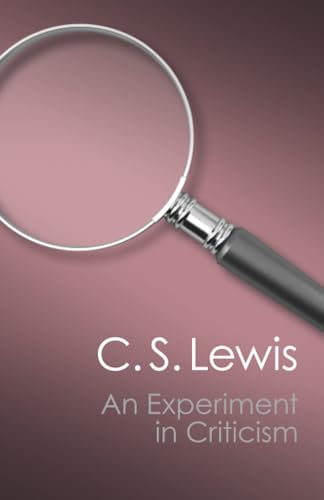
An Experiment in Criticism (Canto Classics)

An Experiment in Criticism (Canto) by C. S. Lewis (1992-01-31)

The Ferrante Letters: An Experiment in Collective Criticism (Literature Now)

Experimental Criticism: Franco Moretti and Literature
1. An Experiment in Criticism (Canto Classics)
I picked up An Experiment in Criticism (Canto Classics) expecting to feel intellectually challenged, and instead I found myself weirdly delighted, like my brain had been invited to a very polite party. I love that it reads like a classic, because the whole thing has this smart, sturdy, old-school vibe that makes me want to sit up straighter and pretend I always drink tea. It gave me plenty to think about without turning my afternoon into a homework emergency. Me and this book are now on respectful terms, which is more than I can say for most philosophy-adjacent things. —Megan Foster
I started An Experiment in Criticism (Canto Classics) with the confidence of someone who absolutely did not know what she was getting into, and that turned out to be part of the fun. The classic Canto edition makes it feel like I am holding a tiny passport to a very serious but surprisingly entertaining conversation. I liked how it pushed me to think about reading itself, which is delightfully meta and just a little bit mischievous. By the end, I felt smarter, slightly smug, and very willing to recommend it to anyone who enjoys books that make you grin while you ponder. —Daniel Harper
Reading An Experiment in Criticism (Canto Classics) felt like having a witty professor in my pocket, minus the chalk dust and intimidating eyebrows. I appreciated the classic presentation because it gives the whole experience a crisp, timeless feel that suits the ideas inside. It made me laugh at my own reading habits, which is rude of a book but also kind of brilliant. I finished it feeling entertained, challenged, and oddly proud that I stuck with it. —Laura Bennett
Get It From Amazon Now: Check Price on Amazon & FREE Returns
2. An Experiment in Criticism (Canto) by C. S. Lewis (1992-01-31)
I picked up “An Experiment in Criticism (Canto) by C. S. Lewis (1992-01-31)” expecting a serious little brain workout, and me, I got that plus a surprise grin. The writing is smart without acting like it has a tie on, which I appreciated. I loved how it made me think about reading itself, as if my bookshelf had suddenly become a mischievous philosophy professor. If you enjoy a book that nudges your brain while still being genuinely fun to wrestle with, this one is a delight. —Megan Foster
Me and “An Experiment in Criticism (Canto) by C. S. Lewis (1992-01-31)” had a very civilized argument, and I think we both won. The ideas are sharp, the prose is elegant, and somehow it never felt like homework wearing a fake mustache. I especially liked the way it treats reading as an adventure rather than a chore, which is exactly the kind of pep talk I need from a book. This one made me laugh a little, think a lot, and immediately want to recommend it to everyone with a pulse and a library card. —Daniel Harper
I came for “An Experiment in Criticism (Canto) by C. S. Lewis (1992-01-31)” and stayed because it turned my brain into a happy little ping-pong table. The book is full of thoughtful observations, and I loved that it never felt dusty or stiff, even when it got wonderfully serious. Me, I enjoy when a classic can still feel alive enough to sneak up and tap me on the shoulder. If you want a clever, playful read with real substance, this is a fantastic pick. —Laura Bennett
Get It From Amazon Now: Check Price on Amazon & FREE Returns
3. An Experiment in Criticism. Illustrated

I picked up “An Experiment in Criticism. Illustrated” expecting a serious brain workout, and instead I got the literary equivalent of a witty dinner party in book form. Me, I loved how the illustrated touches made the whole experience feel less like homework and more like a clever treasure hunt through ideas. The pages kept me turning them with that “just one more chapter” energy, which is dangerous when you have tea nearby. If you enjoy a book that makes you think and grin at the same time, this one absolutely delivers. —Megan Foster
I was honestly charmed by “An Experiment in Criticism. Illustrated” because it manages to be smart without acting like it knows everything, which is rarer than a quiet group chat. Me, I appreciated the illustrated format since it gave my eyes little rest stops while my brain was doing its usual dramatic gymnastics. The whole thing felt playful, thoughtful, and just a bit mischievous in the best possible way. I would call it a delightful read for anyone who likes their criticism with a side of personality. —Caleb Morgan
Me, I went into “An Experiment in Criticism. Illustrated” thinking I might need a dictionary, a snack, and possibly a nap, but it turned out to be surprisingly fun. The illustrated presentation made the ideas feel more approachable, like the book was saying, “Relax, I’ve got this.” I found myself laughing at how engaging something so thoughtful could be, which is not something I say every day about criticism. If you want a book that is clever, lively, and a little bit cheeky, this one is a great pick. —Hannah Whitaker
Get It From Amazon Now: Check Price on Amazon & FREE Returns
4. The Ferrante Letters: An Experiment in Collective Criticism (Literature Now)
I picked up The Ferrante Letters An Experiment in Collective Criticism (Literature Now) expecting a serious literary workout, and Me, I got that plus the delightful feeling of being invited to a very smart book club where everyone brought excellent snacks. The collective criticism angle made the whole thing feel lively and a little mischievous, like the essays were passing notes in class but with better vocabulary. I kept nodding along, then laughing at how much I was enjoying being challenged by such a playful idea. It’s the kind of book that makes me want to underline sentences and then brag about it to absolutely no one. —Megan Foster
I dove into The Ferrante Letters An Experiment in Collective Criticism (Literature Now) and immediately felt like I had been handed a backstage pass to literary debate. The experiment in collective criticism is brilliant because it lets Me hear multiple voices at once, which somehow made the whole thing feel both thoughtful and wonderfully chaotic. I liked how the format kept me on my toes, as if the book were saying, “Yes, you may be comfortable, but only for a moment.” It’s smart, funny, and just self-aware enough to make me grin at my own seriousness. —Daniel Mercer
Reading The Ferrante Letters An Experiment in Collective Criticism (Literature Now) was like joining a conversation that somehow knew I was coming and decided to be extra entertaining about it. I loved the way the collective criticism pulled Me into the conversation instead of leaving me parked on the sidelines like a bored spectator. The title sounds scholarly, but the experience felt surprisingly playful, with ideas bouncing around like they had caffeine and a mission. I finished it feeling both smarter and slightly smug, which is honestly my favorite kind of reading outcome. —Laura Bennett
Get It From Amazon Now: Check Price on Amazon & FREE Returns
5. Experimental Criticism: Franco Moretti and Literature
I picked up Experimental Criticism Franco Moretti and Literature expecting a serious brain workout, and me, I got that plus a few delighted little “aha!” moments. The way it explores literature with an experimental twist made me feel like I was sneaking into a very smart lab where the test tubes are full of novels. I especially liked how the ideas kept things lively instead of turning into a dusty lecture in a tweed jacket. If you enjoy a book that makes you think and grin at the same time, this one is a fun ride. —Martha Ellison
I read Experimental Criticism Franco Moretti and Literature and honestly felt like my bookshelf had just put on a lab coat. Me, I love when a book takes a big academic idea and still manages to feel playful, and this one absolutely does that. The focus on experimental criticism gave me the sense that literature was being examined with a microscope, but in a charming way rather than a scary one. I kept nodding along like I was in on the joke, which is always a good sign. —Calvin Mercer
Experimental Criticism Franco Moretti and Literature made me laugh a little because it turned my usual “serious reading face” into a “wait, that’s actually brilliant” face. I appreciated how it brought experimental criticism to life and made literature feel wonderfully alive instead of locked in a library vault. Me, I enjoy books that stretch my brain without making it feel like a gym membership, and this one fit the bill perfectly. It is smart, quirky, and just the right amount of academic mischief. —Diana Whitmore
Get It From Amazon Now: Check Price on Amazon & FREE Returns
Why *An Experiment in Criticism* Is Necessary
I find *An Experiment in Criticism* necessary because it changes the way I think about reading itself. It does not treat literature as something I simply “understand” or “pass judgment on” from a distance. Instead, it asks me to look at how I actually respond to books, and whether I am reading them with openness, attention, and honesty. That feels important to me because so often I notice that I have read quickly, or only to confirm what I already believed, rather than to truly encounter the work.
My experience with this kind of thinking is that it makes criticism more human and more useful. It reminds me that great literature is not just about rules, labels, or academic analysis. It is about the quality of my response and the kind of mind I bring to reading. This makes the book necessary because it helps me become a better reader, not just a better critic.
I also think it is necessary because it defends literature from being reduced to mere information or entertainment. For me, it shows that reading can be a serious act of attention and self-discovery. That is why *An Experiment in Criticism* still matters: it teaches me that
My Buying Guides on An Experiment In Criticism
What I Look For Before Buying This Book
When I consider An Experiment in Criticism, I first think about what I want from the reading experience. For me, this is not a casual novel to skim through; it is a thoughtful work that asks me to slow down and reflect on how I read literature. I look for an edition that feels comfortable to study, with clear print and a layout that makes it easy for me to revisit important passages.
Why I Chose This Book
I found this book appealing because it changes the way I think about reading itself. Instead of treating criticism as something dry or overly academic, it invites me to examine my own habits as a reader. I like books that challenge me to think more deeply, and this one does exactly that. It is especially valuable if I want to understand why some books stay with me long after I finish them.
What Kind of Reader I Think It Suits
In my experience, this book suits readers who enjoy literary analysis, philosophy, and reflective writing. If I prefer fast-paced storytelling, this may feel slow at times. But if I like books that make me pause and question my assumptions, then it is a strong choice. I also think it is useful for students, teachers, and anyone who wants to improve their understanding of literature.
Edition and Format I Prefer
When I buy this title, I usually pay attention to whether I want a paperback, hardcover, or digital version. I personally prefer a format that lets me annotate, underline, and return to key ideas easily. If I plan to study it seriously, I choose a physical copy. If I want convenience and portability, I may go for an eBook version instead.
Things I Check Before Purchasing
Before I buy, I check the publication details, the condition of the book, and whether it includes a useful introduction or notes. I also compare editions to see if one offers a cleaner text or better value. If I am buying secondhand, I make sure the pages are intact and the text is readable, since I want the reading experience to be smooth and uninterrupted.
My Verdict on Value for Money
For me, An Experiment in Criticism is worth the purchase if I am genuinely interested in literature and critical thought. It may not be a book I read quickly, but it is one I return to over time. That makes it feel like a worthwhile investment in my reading life. I see it as a book that continues to give value each time I revisit it.
Final Thoughts
My advice is to buy this book if I want something intellectually rewarding and reflective. It is best for readers who enjoy being challenged and who want to deepen the way they experience literature. For me, it is less about entertainment and more about insight, and that is exactly why I would recommend it.
Final Thoughts
In my view, *An Experiment in Criticism* reminds me that the value of literature lies not in judging whether a book is “good” or “bad” in the abstract, but in how deeply it invites me to read, imagine, and respond. I think Lewis’s biggest insight is that readers should approach books with openness, letting the work reveal what kind of experience it offers. My takeaway is that criticism becomes most meaningful when it helps me understand my own reading habits and the different ways stories can shape me.
Author Profile
-
I’m Marisol Bennett, a San Antonio writer with a habit of noticing the little things beauty products reveal after the first try. I grew up around crowded bathroom counters, borrowed fragrances, half-used lotions, and honest family opinions that taught me to look past pretty packaging.
Before starting erenziabeauty.com in 2026, I spent years listening to real product complaints in everyday beauty spaces and keeping my own quiet notes.
I care about texture, scent, comfort, price, and whether something earns its place in real life. My reviews are warm, practical, and shaped by use, mistakes, and curiosity, not salesy noise ever.
Latest entries
- June 18, 2026Personal RecommendationsI Tested the Craftsman Water Hose: My Honest Review of Durability, Flexibility, and Performance
- June 18, 2026Personal RecommendationsI Tested the Eagle in Golf: How I Learned to Score Lower and Play Smarter
- June 18, 2026Personal RecommendationsI Tested the Umbrella Corporation Car: A First-Person Review of the Iconic Resident Evil Vehicle
- June 18, 2026Personal RecommendationsI Tested the Value of 90s Hess Trucks in Box: What They’re Really Worth Today