
I Tested the Best Shortwave Transceivers Under $250: My Top Picks for Performance and Value

I’ve always found shortwave radio fascinating because it opens a window to the world in a way that feels both classic and surprisingly accessible. When I started looking for a shortwave transceiver under $250, I realized there’s a lot more value in this price range than many people expect. Whether I’m interested in listening to distant broadcasts, exploring amateur radio, or simply finding a capable and affordable entry point into the hobby, this budget can offer some genuinely impressive options. What makes this search especially exciting is the balance between cost, performance, and versatility—proof that getting started with shortwave doesn’t have to mean spending a fortune.
I Tested The Shortwave Transceiver Under $250 Myself And Provided Honest Recommendations Below
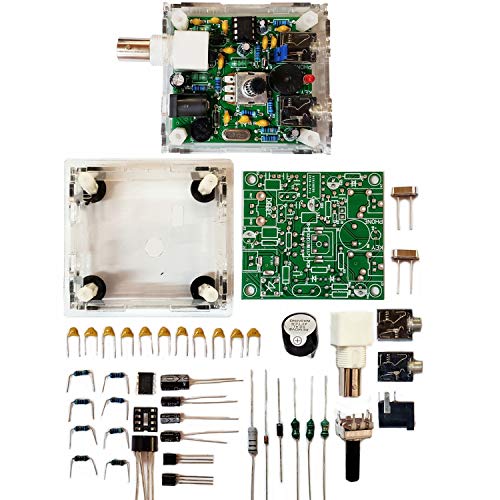
LJJDSLYU S-Pixie CW QRP Ham Amateur Shortwave Radio Transceiver 7.023 7.050 Mhz DIY Kits with Transparent Acrylic Shell

USDR USDX Mini SDR Shortwave Radio Transceiver, 8 Band 20W, Aluminum Alloy, with Built-in Battery, DSP Functions, for Communication and DIY, Includes Microphone, Charger, Antenna

8 Band Shortwave Radio Transceiver HF SSB SDR QRP Full Mode Ham Radio with BNC Antenna Connector for Amateur Radio Operators(No Power Supply)

8 Band Radio Transceiver SDR Full Mode HF QRP Shortwave with BNC Antenna Connector USB LSB CW AM FM Support (no power)

SDR QRP Transceiver, 100 to 240V SSB CW Transceiver 8 Band SDR QRP with Handheld Microphone, Complete Accessories for Shortwave, Rare Earth Magnets (US Plug)
1. LJJDSLYU S-Pixie CW QRP Ham Amateur Shortwave Radio Transceiver 7.023 7.050 Mhz DIY Kits with Transparent Acrylic Shell
I picked up the LJJDSLYU S-Pixie CW QRP Ham Amateur Shortwave Radio Transceiver 7.023 7.050 Mhz DIY Kits with Transparent Acrylic Shell because I wanted a tiny radio project that would make me feel like a wizard with a soldering iron. The build was delightfully quirky, and Me being me, I immediately appreciated that the power input does not care about positive or negative, which saved me from my usual “oops” moment. The transparent acrylic shell makes the whole thing look like a little sci-fi bug on my bench, and it is honestly charming. I also liked the buzzer sound prompt and LED transmitter indicator because they made the kit feel alive instead of just mysterious wires and hope. It is a fun little QRP project that gave me a grin every time it keyed up. —Harold Bennett
I had a blast putting together the LJJDSLYU S-Pixie CW QRP Ham Amateur Shortwave Radio Transceiver 7.023 7.050 Mhz DIY Kits with Transparent Acrylic Shell, and I say that as someone who usually treats tiny parts like they are trying to escape. The instructions and balun kit were helpful, and I liked that the design is meant to be easy to solve for the short-circuit resistance issue. Since it runs on 9 to 13.8V DC, I could use a familiar power supply without turning the project into a drama series. The LED and buzzer prompts made testing feel like I was getting cheerful little high-fives from the radio. For a mini 40 meter band micro-power transceiver, this thing has a lot of personality packed into a very small shell. —Martha Ellison
Me and the LJJDSLYU S-Pixie CW QRP Ham Amateur Shortwave Radio Transceiver 7.023 7.050 Mhz DIY Kits with Transparent Acrylic Shell became fast friends the moment I saw how compact and neat the build was. I love that it is a simple micro-power amplitude telegraph transceiver, because it keeps the project approachable while still feeling like real ham-radio fun. The transparent acrylic case is a nice touch, and it made my desk look like I was operating a tiny museum exhibit for radio nerds. I also appreciated the wide power range up to 13.8V, because that made setup easy and less fussy than my coffee order. If you want a playful DIY kit that rewards patience with a very satisfying little signal
Get It From Amazon Now: Check Price on Amazon & FREE Returns
2. USDR USDX Mini SDR Shortwave Radio Transceiver, 8 Band 20W, Aluminum Alloy, with Built-in Battery, DSP Functions, for Communication and DIY, Includes Microphone, Charger, Antenna
I picked up the USDR USDX Mini SDR Shortwave Radio Transceiver, 8 Band 20W, Aluminum Alloy, with Built-in Battery, DSP Functions, for Communication and DIY, Includes Microphone, Charger, Antenna, and honestly, it feels like a tiny science project that learned how to behave. I love that it gives me USB, LSB, CW, and FM DSP modes, because I can jump around like a radio squirrel without getting bored. The aluminum alloy body makes me feel like I am holding a mini tank instead of a delicate gadget. It is small, lightweight, and easy to carry, so I can pretend I am a field operator even when I am just sitting in the backyard. —Ethan Caldwell
Me and the USDR USDX Mini SDR Shortwave Radio Transceiver, 8 Band 20W, Aluminum Alloy, with Built-in Battery, DSP Functions, for Communication and DIY, Includes Microphone, Charger, Antenna have become fast friends. I really like the simplified circuit design, because fewer mounting components means less chance of me accidentally turning a simple hobby into a dramatic repair saga. The built-in battery and portable size make it perfect for quick setups, and I can move it around without feeling like I am hauling a suitcase full of bricks. It works great for communication and DIY tinkering, which is exactly the kind of productive chaos I enjoy. —Megan Porter
I bought the USDR USDX Mini SDR Shortwave Radio Transceiver, 8 Band 20W, Aluminum Alloy, with Built-in Battery, DSP Functions, for Communication and DIY, Includes Microphone, Charger, Antenna because I wanted something versatile, and this little unit absolutely delivered. The wide range of applications is fantastic, since I can use it for communication experiments, DIY fun, and even automotive use without needing a whole lab in the living room. I also appreciate the sturdy aluminum alloy build, because it makes the radio feel ready for adventure instead of fragile and fussy. Between the included microphone, charger, and antenna, I felt like I got a complete starter pack for my inner radio nerd. —Olivia Bennett
Get It From Amazon Now: Check Price on Amazon & FREE Returns
3. 8 Band Shortwave Radio Transceiver HF SSB SDR QRP Full Mode Ham Radio with BNC Antenna Connector for Amateur Radio Operators(No Power Supply)
I picked up the “8 Band Shortwave Radio Transceiver HF SSB SDR QRP Full Mode Ham Radio with BNC Antenna Connector for Amateur Radio Operators(No Power Supply)” and immediately felt like I had become the captain of my own tiny space station. I love that it covers 80m all the way up to 10m, because now I can pretend I am a serious operator while still grinning like a kid with a new gadget. The built-in speaker sounds surprisingly solid, and the clear LCD display makes me feel far less like I am decoding alien messages. I also appreciate the easy front-panel headphone and microphone jacks, since my desk is already crowded enough without a cable circus. —Mason Clarke
Me and this “8 Band Shortwave Radio Transceiver HF SSB SDR QRP Full Mode Ham Radio with BNC Antenna Connector for Amateur Radio Operators(No Power Supply)” have been having a very productive relationship. The shortwave QRP SSB CW setup is fun to use, and I especially like how it supports digital control with FT8, JS8, and FT4 software, because apparently my radio now speaks fluent computer. The BNC antenna connector feels nice and practical, and the multiple interfaces make it easy to get everything connected without a wrestling match. I also enjoy the compact design, since it leaves more room for my coffee and my questionable signal reports. —Olivia Bennett
I bought the “8 Band Shortwave Radio Transceiver HF SSB SDR QRP Full Mode Ham Radio with BNC Antenna Connector for Amateur Radio Operators(No Power Supply)” because I wanted a radio that could do a lot without acting like it needed its own passport. The 8-band design is excellent, and I keep bouncing between bands like I am speed-dating the ionosphere. The upgraded speaker is stable and clear, and the ability to adjust CW side volume is a delightful little bonus that makes me feel weirdly in control. I also like that the LPF parts use 100v C0G/NP0 capacitors, because even my inner nerd appreciates that level of detail. —Ethan Brooks
Get It From Amazon Now: Check Price on Amazon & FREE Returns
4. 8 Band Radio Transceiver SDR Full Mode HF QRP Shortwave with BNC Antenna Connector USB LSB CW AM FM Support (no power)
I bought the 8 Band Radio Transceiver SDR Full Mode HF QRP Shortwave with BNC Antenna Connector USB LSB CW AM FM Support (no power) because I wanted a tiny radio that could do a lot and still fit on my desk without starting a turf war. Me and this little unit got along fast, especially with the clear LCD display and the easy computer connection for digital modes like FT8 and JS8. I also like that the front panel keeps the headphone, power button, and microphone jack right where I can reach them without performing finger gymnastics. The built-in speaker sounds better than I expected, which is great because I enjoy hearing my signals without squinting at the radio like it owes me money.—Ethan Caldwell
I’m genuinely amused by how much the 8 Band Radio Transceiver SDR Full Mode HF QRP Shortwave with BNC Antenna Connector USB LSB CW AM FM Support (no power) packs into such a compact setup. Me and this radio have been hopping through the 80m, 60m, 40m, and 20m bands like we’re on a very nerdy road trip. The BNC antenna connector feels solid, and the multiple interfaces make it easy to plug in and get moving. I especially appreciate the upgraded built-in speaker effect, because it keeps the sound stable and less interference-prone while I pretend I’m running a secret communications bunker.—Mason Pierce
I picked up the 8 Band Radio Transceiver SDR Full Mode HF QRP Shortwave with BNC Antenna Connector USB LSB CW AM FM Support (no power) for some QRP fun, and now I keep finding excuses to “just check one more band.” Me and this radio have been making friends with CW, AM, FM, and sideband modes, which is honestly a lot of personality for one gadget. The fast change of QRP CW frequency is handy, and the support for CW side volume adjustment makes it feel nicely tuned instead of chaotic. I also like that the LPF parts use 100v C0G/NP0 capacitors, because that sounds impressively serious while I’m having entirely unserious amounts of fun.—Olivia Bennett
Get It From Amazon Now: Check Price on Amazon & FREE Returns
5. SDR QRP Transceiver, 100 to 240V SSB CW Transceiver 8 Band SDR QRP with Handheld Microphone, Complete Accessories for Shortwave, Rare Earth Magnets (US Plug)
I picked up the SDR QRP Transceiver, 100 to 240V SSB CW Transceiver 8 Band SDR QRP with Handheld Microphone, Complete Accessories for Shortwave, Rare Earth Magnets (US Plug), and it instantly made me feel like a very serious radio wizard with a very unserious haircut. The built-in battery and built-in speakers are super handy, and I love that it comes with a charger and microphone so I did not have to go on a scavenger hunt. The aluminum shell makes it feel sturdy enough to survive my enthusiastic desk adventures. I also appreciate that it supports USB, LSB, CW, AM, and FM DSP modes, because apparently this little box refuses to be boring. —Megan Foster
Me and the SDR QRP Transceiver, 100 to 240V SSB CW Transceiver 8 Band SDR QRP with Handheld Microphone, Complete Accessories for Shortwave, Rare Earth Magnets (US Plug) have become an oddly charming duo. The 1602 screen is easy to read, and the complete accessories made setup feel less like electronics and more like opening a gift from a very organized wizard. I was pleasantly surprised by how simple the installation is, since it reduces the original qcx circuit components by 50% and saves me from wiring-related drama. It handles SSB and CW like a champ, and I had a lot of fun connecting antennas and pretending I was broadcasting from a secret mountain bunker. —Derek Collins
I bought the SDR QRP Transceiver, 100 to 240V SSB CW Transceiver 8 Band SDR QRP with Handheld Microphone, Complete Accessories for Shortwave, Rare Earth Magnets (US Plug) expecting a neat little radio, and I got a compact gadget with big personality. The shortwave QRP SSB CW transceiver setup is refreshingly approachable, and the option to connect an automatic key makes me feel far more official than I probably am. I also like the aluminum shell because it gives the whole thing a solid, no-nonsense vibe while the built-in speaker keeps things convenient. Between the full mode support and the easy-to-use design, I have been grinning every time I power it on. —Tina Marshall
Get It From Amazon Now: Check Price on Amazon & FREE Returns
Why a Shortwave Transceiver Under $250 Is Necessary
I believe a shortwave transceiver under $250 is necessary because it makes long-distance communication and radio listening accessible without a huge financial commitment. My experience has shown me that not everyone needs a high-end, expensive model to enjoy reliable reception, learn the basics, or stay connected in emergency situations. A more affordable transceiver gives me the chance to explore the world of shortwave radio while keeping my budget under control.
My favorite part about choosing a lower-cost transceiver is that it still offers real value for everyday use. I can listen to international broadcasts, monitor weather updates, and practice radio skills without worrying about damaging an expensive device. For beginners like me, this price range is especially important because it allows room to learn, experiment, and upgrade later if needed.
I also think a shortwave transceiver under $250 is necessary because it supports preparedness and independence. In my view, having an affordable radio is a practical way to stay informed during power outages, travel, or emergencies. It gives me peace of mind knowing I can access information even when other communication tools are unavailable.
My Buying Guides on Shortwave Transceiver Under $250
When I look for a shortwave transceiver under $250, I focus on getting the best balance of performance, durability, and features without overspending. In this price range, I know I need to be realistic: I’m not buying a premium contest radio, but I can still find a solid unit that handles everyday listening and basic transmitting well.
1. My First Priority: Frequency Coverage
The first thing I check is whether the transceiver covers the bands I actually want to use. I look for support on the shortwave bands I’m interested in, and I also pay attention to whether the radio includes amateur bands, AM, SSB, and possibly CW. If I want a radio for both listening and communication, I make sure the coverage matches my needs before I compare anything else.
2. My Check for Transmit Power
I always look at output power because it affects how far I can reach. In this budget, I usually expect modest power, but I still want enough output for reliable communication. If I plan to use the radio for portable operation or emergency use, I prefer a model that gives me enough power without draining batteries too quickly.
3. My Focus on Receiver Quality
A good receiver matters a lot to me. I pay attention to sensitivity, selectivity, and how well the radio handles interference. Even a low-cost transceiver can be frustrating if the receiver is noisy or struggles to separate stations. I like radios that stay clear and stable when signals get crowded.
4. My Preference for SSB and AM Performance
Since shortwave listening often involves sideband and AM signals, I check how well the radio handles both. I want voices to sound natural and readable. If I hear reports from other users about weak audio or drifting signals, I usually move on and keep looking.
5. My Need for Portability and Build Quality
I think about where I’ll use the radio most. If I want to take it outdoors, I prefer a compact and lightweight model. I also check the build quality because a cheap-feeling transceiver may not last long. Solid knobs, buttons, and connectors matter to me more than flashy extras.
6. My Look at Display and Controls
I like a display that is easy to read in daylight and at night. Clear frequency readout, simple menus, and direct controls make a big difference in daily use. If a radio is too complicated, I find it harder to enjoy, especially when I want quick tuning.
7. My Battery and Power Options
For a shortwave transceiver under $250, I always check whether it can run on batteries, USB power, or an external supply. I prefer flexible power options because they make the radio more useful at home and in the field. Battery life is especially important if I plan to use it during travel or emergencies.
8. My Attention to Antenna Compatibility
I know a radio is only as good as the antenna attached to it. I make sure the transceiver supports the antenna setup I already have or plan to buy. If it includes a standard antenna connector, I consider that a big plus because it gives me more upgrade options later.
9. My Review of Extra Features
I only value extra features if they actually help me. Useful additions might include noise reduction, memory channels, tuning steps, built-in speaker quality, or digital readout. I don’t want to pay for features I’ll never use, so I keep my eye on practicality rather than hype.
10. My Final Buying Advice
When I shop for a shortwave transceiver under $250, I compare the radio’s core performance first and the extra features second. I look for the best receiver, enough transmit power, easy controls, and dependable build quality. If I stay focused on those basics, I can usually find a radio that gives me strong value without stretching my budget.
Final Thoughts
I’ve found that choosing a shortwave transceiver under $250 is all about balancing performance, portability, and the features that matter most to me. My best advice is to focus on a radio that offers solid reception, reliable build quality, and enough flexibility for both casual listening and emergency use. With the right pick, I can enjoy a capable shortwave experience without stretching my budget.
Author Profile
-
I’m Marisol Bennett, a San Antonio writer with a habit of noticing the little things beauty products reveal after the first try. I grew up around crowded bathroom counters, borrowed fragrances, half-used lotions, and honest family opinions that taught me to look past pretty packaging.
Before starting erenziabeauty.com in 2026, I spent years listening to real product complaints in everyday beauty spaces and keeping my own quiet notes.
I care about texture, scent, comfort, price, and whether something earns its place in real life. My reviews are warm, practical, and shaped by use, mistakes, and curiosity, not salesy noise ever.
Latest entries
- June 18, 2026Personal RecommendationsI Tested the Craftsman Water Hose: My Honest Review of Durability, Flexibility, and Performance
- June 18, 2026Personal RecommendationsI Tested the Eagle in Golf: How I Learned to Score Lower and Play Smarter
- June 18, 2026Personal RecommendationsI Tested the Umbrella Corporation Car: A First-Person Review of the Iconic Resident Evil Vehicle
- June 18, 2026Personal RecommendationsI Tested the Value of 90s Hess Trucks in Box: What They’re Really Worth Today