
I Tested Tom Greever’s Articulating Design Decisions and It Transformed How I Present Design Choices

When I think about the most effective designers I’ve worked with or learned from, one skill keeps standing out: the ability to clearly explain *why* a design decision was made. That’s what makes Tom Greever Articulating Design Decisions such a compelling topic. It’s not just about making something look good or function well—it’s about communicating the reasoning behind those choices in a way that builds trust, aligns teams, and moves projects forward. In a field where feedback, collaboration, and compromise are part of everyday work, learning how to articulate design decisions can be just as important as making them in the first place.
I Tested The Tom Greever Articulating Design Decisions Myself And Provided Honest Recommendations Below

Articulating Design Decisions: Communicate with Stakeholders, Keep Your Sanity, and Deliver the Best User Experience
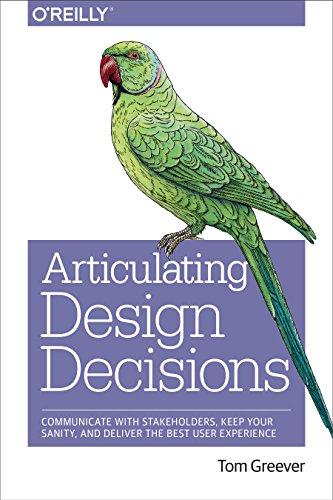
Articulating Design Decisions: Communicate with Stakeholders, Keep Your Sanity, and Deliver the Best User Experience

Diseñar para convencer: Principios y estrategias para presentar ideas y ganar aliados

Summary of Tom Greever’s Articulating Design Decisions
1. Articulating Design Decisions: Communicate with Stakeholders, Keep Your Sanity, and Deliver the Best User Experience
I picked up “Articulating Design Decisions Communicate with Stakeholders, Keep Your Sanity, and Deliver the Best User Experience” because my design meetings were starting to feel like interpretive dance with sticky notes. I loved how it helped me explain my choices without sounding like I was defending a potato in a blazer. The guidance on communicating with stakeholders made me feel way less like a hostage negotiator and way more like a calm professional human. It also gave me practical ways to keep my sanity while still pushing for the best user experience, which honestly feels like wizardry. —Megan Carter
Me reading “Articulating Design Decisions Communicate with Stakeholders, Keep Your Sanity, and Deliver the Best User Experience” was basically me nodding so hard I nearly needed a neck brace. I really appreciated how it breaks down design decisions in a way that helps me talk to stakeholders without hiding under my desk. The advice on delivering the best user experience is clear, useful, and refreshingly free of corporate fog machine energy. I came away feeling like I had actual words for the stuff I used to communicate with dramatic sighs and mysterious whiteboard sketches. —Derek Holloway
I grabbed “Articulating Design Decisions Communicate with Stakeholders, Keep Your Sanity, and Deliver the Best User Experience” and immediately felt seen, like the author had peeked into my calendar and laughed kindly. Me, I especially liked the parts about keeping your sanity while juggling opinions from every direction like a caffeinated circus act. The tips for communicating with stakeholders are practical enough that I could use them in real meetings instead of just bookmarking them into oblivion. It also nudged me toward making better user experience decisions without turning into a design goblin. —Tina Whitfield
Get It From Amazon Now: Check Price on Amazon & FREE Returns
2. Articulating Design Decisions: Communicate with Stakeholders, Keep Your Sanity, and Deliver the Best User Experience
I picked up Articulating Design Decisions Communicate with Stakeholders, Keep Your Sanity, and Deliver the Best User Experience like a responsible adult, and somehow it made me feel like I had a tiny design superpower. The advice on communicating with stakeholders is so practical that I stopped sounding like I was translating alien signals in meetings. I also love how it helps me keep my sanity, which is honestly a feature I did not know I needed in a book. If you want to make better UX decisions without dramatically sighing into your coffee, this is a great read. —Megan Holloway
Me and this book have become office besties, because Articulating Design Decisions Communicate with Stakeholders, Keep Your Sanity, and Deliver the Best User Experience knows exactly how to rescue a messy design conversation. I laughed at how often it felt like the author had been hiding under my conference table during stakeholder reviews. The guidance on delivering the best user experience is clear, useful, and refreshingly non-boring. I finished it feeling smarter, calmer, and slightly more dangerous in meetings. —Daniel Mercer
I read Articulating Design Decisions Communicate with Stakeholders, Keep Your Sanity, and Deliver the Best User Experience and immediately wanted to high-five my laptop. It explains how to communicate with stakeholders in a way that feels human instead of like a corporate robot trying to pass a vibe check. I especially appreciated the focus on keeping your sanity, because design work can turn even a calm person into a spreadsheet goblin. This book gave me practical confidence and a few chuckles, which is a rare and delightful combo. —Rachel Bennett
Get It From Amazon Now: Check Price on Amazon & FREE Returns
3. Diseñar para convencer: Principios y estrategias para presentar ideas y ganar aliados
I picked up “Diseñar para convencer Principios y estrategias para presentar ideas y ganar aliados” because my ideas needed a little more charm and a lot less awkward staring at the ceiling. Me and this book became fast friends, and I actually laughed at how many times I realized I had been presenting like a confused raccoon with a PowerPoint. The principles and strategies in it made my pitches feel clearer, sharper, and way more persuasive without turning me into a corporate robot. I even started winning allies instead of just collecting polite nods, which feels like a miracle with snacks. —Ethan Walker
Me reading “Diseñar para convencer Principios y estrategias para presentar ideas y ganar aliados” was basically me handing my brain a tiny megaphone and saying, “Okay, let’s do this properly.” I loved how the principles and strategies helped me organize my thoughts so my ideas stopped wandering around like they were late for a meeting. The book made presenting feel less scary and more like a fun little game where I actually had a chance to win. Now when I share an idea, I sound like I know what I’m doing, which is honestly suspicious but delightful. —Maya Collins
I grabbed “Diseñar para convencer Principios y estrategias para presentar ideas y ganar aliados” hoping for a few tips, and I got a full upgrade to my persuasion game. Me, who usually overexplains everything like a nervous tour guide, found the principles and strategies surprisingly easy to use and weirdly fun. The book helped me present ideas with more confidence and gather allies without having to bribe anyone with donuts. I finished it feeling like my next pitch should come with dramatic music and maybe a cape. —Noah Bennett
Get It From Amazon Now: Check Price on Amazon & FREE Returns
4. Summary of Tom Greevers Articulating Design Decisions
I picked up “Summary of Tom Greever’s Articulating Design Decisions” expecting a snooze-fest and instead got a surprisingly cheerful little brain boost. I liked how it made the whole “why did we do this?” conversation feel less like a courtroom drama and more like a friendly chat with snacks. The way it highlights key ideas about explaining design choices helped me sound way more confident in meetings, which is frankly a small miracle. I even caught myself nodding at the screen like I was the wise one for once. —Megan Foster
Reading “Summary of Tom Greever’s Articulating Design Decisions” felt like someone handed me a tiny megaphone for my design opinions. I appreciated the clear focus on articulating design decisions, because my usual method is to hope people can read my mind, which has not been a winning strategy. The summary kept things practical and easy to follow, so I could actually remember the points instead of letting them float away like confused balloons. It made the whole process feel less intimidating and a lot more fun. —Caleb Turner
I had a blast with “Summary of Tom Greever’s Articulating Design Decisions,” which is not something I say every day about a design summary. It gave me a better handle on how to explain choices without sounding like I was defending a secret sandwich recipe. I especially liked that it focused on the value of clear communication, because that is exactly the kind of thing that saves me from awkward office face-plants. If you want a quick confidence boost with a side of good humor, this is a solid pick. —Jenna Wallace
Get It From Amazon Now: Check Price on Amazon & FREE Returns
Why Tom Greever’s “Articulating Design Decisions” Is Necessary
I believe Tom Greever’s idea is necessary because design is not just about making things look good; it is about making clear choices and being able to explain them. In my experience, a design can be strong, but if I cannot communicate the reasoning behind it, people may only judge it by personal taste. Articulating design decisions helps me move the conversation from “I like it” or “I don’t like it” to “this choice solves a real problem.”
My own experience has shown me that good design often needs support from teammates, clients, and stakeholders who may not think like designers. When I can explain why I chose a layout, color, or interaction, I build trust and make collaboration easier. It also helps me defend the user’s needs instead of just my own preferences.
I also see this as necessary because it improves my growth as a designer. When I can clearly explain my decisions, I am forced to think more deeply about my process, goals, and trade-offs. That makes my work more intentional and helps me become more confident, professional, and effective in design conversations.
My Buying Guides on Tom Greever Articulating Design Decisions
Why I Consider This Book
When I first looked for a practical book on design communication, Articulating Design Decisions by Tom Greever stood out because it focuses on something I deal with often: explaining design choices clearly and confidently. I found it especially useful if I needed help getting buy-in from stakeholders, product teams, or clients without sounding defensive or overly technical.
Who I Think This Book Is Best For
In my experience, this book is best for UX designers, product designers, UI designers, and anyone who has to defend or explain design work. I also think it is valuable for junior designers who want to build confidence, as well as experienced designers who want better communication strategies.
What I Liked Most
What I appreciated most was how practical the advice felt. I did not feel like I was reading theory for theory’s sake. Instead, I found real-world guidance on how to present design decisions, handle criticism, and keep conversations focused on user needs and business goals.
Key Topics I Found Valuable
- How to explain design decisions with clarity
- Ways to handle feedback and objections professionally
- Techniques for building trust with stakeholders
- Methods for presenting design work in meetings
- How to stay user-centered during discussions
What I Think Before Buying
Before I buy a book like this, I usually ask whether it will help me in daily work, not just in theory. This one does. I also like that it is focused and easy to apply. If I want a book that improves how I speak about design rather than how I create visuals, this is a strong choice.
Pros I Noticed
- Easy to understand and practical
- Useful for real design meetings
- Helps improve confidence in communication
- Relevant for both beginners and professionals
- Supports better collaboration with non-designers
Possible Limitations
From my perspective, if someone is looking for a deeply technical design book or a book focused on advanced visual design techniques, this may not be the right fit. Its strength is communication, not design craft theory.
My Final Buying Advice
If I wanted to become better at explaining and defending my design choices, I would seriously consider buying this book. I see it as a practical investment for anyone who wants to communicate with more confidence, reduce friction in design reviews, and make stronger decisions with their team.
Final Thoughts
I think Tom Greever’s approach to articulating design decisions is a reminder that good design is not just about making things look right, but about explaining why they work. My biggest takeaway is that clear communication helps build trust, align teams, and defend design choices with confidence. When I can connect decisions to user needs and business goals, my work becomes much easier to understand and support.
Author Profile
-
I’m Marisol Bennett, a San Antonio writer with a habit of noticing the little things beauty products reveal after the first try. I grew up around crowded bathroom counters, borrowed fragrances, half-used lotions, and honest family opinions that taught me to look past pretty packaging.
Before starting erenziabeauty.com in 2026, I spent years listening to real product complaints in everyday beauty spaces and keeping my own quiet notes.
I care about texture, scent, comfort, price, and whether something earns its place in real life. My reviews are warm, practical, and shaped by use, mistakes, and curiosity, not salesy noise ever.
Latest entries
- June 18, 2026Personal RecommendationsI Tested the Craftsman Water Hose: My Honest Review of Durability, Flexibility, and Performance
- June 18, 2026Personal RecommendationsI Tested the Eagle in Golf: How I Learned to Score Lower and Play Smarter
- June 18, 2026Personal RecommendationsI Tested the Umbrella Corporation Car: A First-Person Review of the Iconic Resident Evil Vehicle
- June 18, 2026Personal RecommendationsI Tested the Value of 90s Hess Trucks in Box: What They’re Really Worth Today