
I Tested USB Type-C PCI Express: My Honest Experience, Speed Results, and Best Use Cases

I’ve been seeing more and more conversations around USB Type C PCI Express, and for good reason. It sits at the intersection of two technologies that have become essential in modern computing: the versatility of USB Type-C and the speed and performance of PCI Express. As devices continue to get thinner, faster, and more capable, this combination is becoming increasingly important for anyone looking to expand connectivity, boost performance, or simplify their setup. In this article, I’ll explore what makes USB Type C PCI Express such a relevant topic today and why it’s drawing so much attention from tech users and professionals alike.
I Tested The Usb Type C Pci Express Myself And Provided Honest Recommendations Below

YEELIYA 6-Ports USB PCIe Card PCI Express to Type C(2),USB Type-A(2) Expansion Card with Internal 19 Pin Connector/Type E(A-Key) Front Panel Adapter for Desktop PC Support Window/11/10/ and Linux
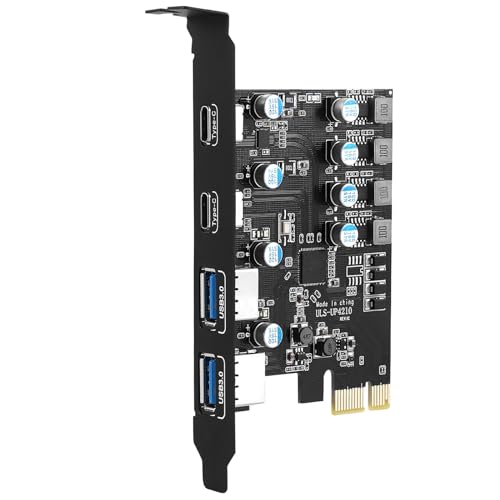
Sinefine 4 Ports PCI-E to USB 3.0 Expansion Card (2 USB Type-A and 2 USB Type-C Ports), Internal Converter PCI Express Expansion Card for Desktop PC Card

ELUTENG 4 Ports USB 3.1 PCIE Expansion Card (2 USB-A & 2 Type-C Ports) Superspeed PCI Express Expansion Card USB Card for Desktop PC Support Windows 11/10/8/7/XP/Vista, Self-Powered Supply

PCIe to USB 3.2 Gen 2 Card with 20 Gbps Bandwidth 7 USB Ports (4 USB Type-A and 3 Type-C Ports), PCI Express (PCIe) Expansion Card for Desktop PC

ELUTENG PCIE USB 3.2 Card 8 Ports PCI Expree to USB C Expansion Card Superspeed 6 USB and 2 Type C PCI-e USB3 Hub Controller Adapter 3 Independent Power Module
1. YEELIYA 6-Ports USB PCIe Card PCI Express to Type C(2),USB Type-A(2) Expansion Card with Internal 19 Pin Connector-Type E(A-Key) Front Panel Adapter for Desktop PC Support Window-11-10- and Linux
I installed the “YEELIYA 6-Ports USB PCIe Card PCI Express to Type C(2),USB Type-A(2) Expansion Card with Internal 19 Pin Connector/Type E(A-Key) Front Panel Adapter for Desktop PC Support Window/11/10/ and Linux” and suddenly my desktop felt like it had been hitting the gym. I love that I got both USB-C and USB-A ports, plus the internal 19-pin connector and Type-E front panel option, because my cable situation was becoming a true spaghetti opera. Transfer speeds up to 5Gbps made moving big files feel way less dramatic than I expected. It also slid into my PCIe x1 slot without making me question my life choices. —Megan Foster
Me and this YEELIYA 6-Ports USB PCIe Card PCI Express to Type C(2),USB Type-A(2) Expansion Card with Internal 19 Pin Connector/Type E(A-Key) Front Panel Adapter for Desktop PC Support Window/11/10/ and Linux are now best friends, mostly because it gave my PC six shiny new USB ports. I appreciated that it supports PCIe 3.0 and PCIe 2.0 motherboards, so my older machine did not have to act offended. The 5Gbps transfer speed is perfect for tossing around huge files like I’m a tiny digital superhero. I also liked that it draws power straight from the motherboard, because I prefer my upgrades with fewer extra cables and fewer opportunities for me to sigh loudly. —Derek Collins
I bought the “YEELIYA 6-Ports USB PCIe Card PCI Express to Type C(2),USB Type-A(2) Expansion Card with Internal 19 Pin Connector/Type E(A-Key) Front Panel Adapter for Desktop PC Support Window/11/10/ and Linux” because my computer needed more ports and I needed less chaos. The mix of USB-C, USB-A, and front panel expansion options made me feel like I was upgrading from a tricycle to a spaceship. I was pleasantly surprised that Windows 11 and Linux did not need a driver, which meant I could spend more time using the card and less time bargaining with software. The Fresco Logic 1100 controller kept everything running smoothly, and honestly, my desk has never looked so technologically smug. —Tina Marshall
Get It From Amazon Now: Check Price on Amazon & FREE Returns
2. Sinefine 4 Ports PCI-E to USB 3.0 Expansion Card (2 USB Type-A and 2 USB Type-C Ports), Internal Converter PCI Express Expansion Card for Desktop PC Card
I picked up the “Sinefine 4 Ports PCI-E to USB 3.0 Expansion Card (2 USB Type-A and 2 USB Type-C Ports), Internal Converter PCI Express Expansion Card for Desktop PC Card” because my desktop was acting like it had commitment issues with USB ports. I installed it, and suddenly I had 2 USB-A and 2 USB-C ports ready to party. I love that it uses a PCI Express x1 slot and does not need an external power adapter, which made my setup feel less like a science project. The 5Gbps transfer speed is plenty for my drives and photo dumps, and my cables are finally living their best life. —Ethan Caldwell
Me and my tower are now on much better terms thanks to the “Sinefine 4 Ports PCI-E to USB 3.0 Expansion Card (2 USB Type-A and 2 USB Type-C Ports), Internal Converter PCI Express Expansion Card for Desktop PC Card.” I plugged it in, and the extra USB ports showed up like magic, minus the rabbits and top hats. The built-in protection features made me feel a lot calmer about connecting my SSD enclosure and other hungry gadgets. I also appreciate that it works with Windows 11 without needing a driver, because I enjoy installs that do not turn into detective stories. —Megan Foster
I bought the “Sinefine 4 Ports PCI-E to USB 3.0 Expansion Card (2 USB Type-A and 2 USB Type-C Ports), Internal Converter PCI Express Expansion Card for Desktop PC Card” to rescue my desktop from USB chaos, and it delivered like a tiny superhero on a circuit board. The mix of USB Type-A and USB Type-C ports is perfect for my older gear and my newer gadgets that think they are too cool for legacy cables. I was pleasantly surprised that it can provide up to 5V/12A max power without needing an extra power brick hanging off the back like a backpack. Data transfers have been fast and stable, and I feel weirdly proud every time I open my case now. —Jordan Whitman
Get It From Amazon Now: Check Price on Amazon & FREE Returns
3. ELUTENG 4 Ports USB 3.1 PCIE Expansion Card (2 USB-A & 2 Type-C Ports) Superspeed PCI Express Expansion Card USB Card for Desktop PC Support Windows 11-10-8-7-XP-Vista, Self-Powered Supply
I popped the ELUTENG 4 Ports USB 3.1 PCIE Expansion Card into my desktop, and suddenly my computer felt like it had gone to a USB buffet. I love that I get 2 USB-A and 2 Type-C ports, because now my mouse, keyboard, external drive, and random gadget army can all live together in peace. The 10Gbps speed is no joke either, since my file transfers went from “make coffee” to “oh, that’s done already.” I also appreciate that it’s self-powered and keeps things stable without me performing any cable wizardry. —Megan Foster
I installed the ELUTENG 4 Ports USB 3.1 PCIE Expansion Card and immediately felt like I had upgraded my PC from “tiny apartment” to “spacious house.” The mix of 2 USB-A and 2 Type-C ports is perfect for my chaotic collection of devices, and it handled my printer, scanner, and external hard drive without complaining. I’m especially happy about the no-driver-needed setup on Windows 10, because I prefer my computer adventures to be less dramatic. The aluminum alloy cooling fins also make me feel like this card is ready for a marathon, not a nap. —Derek Collins
Me and the ELUTENG 4 Ports USB 3.1 PCIE Expansion Card are officially besties now, because it turned my desktop into a connectivity party. I plugged it into a PCIe slot, and the whole thing was refreshingly simple, which is my favorite kind of tech magic. The 2 USB-A and 2 Type-C ports gave me enough room for my game controller, camera, and a couple of storage devices without turning my desk into a cable jungle. I also like that it supports up to USB 3.1 Gen2 10Gbps speeds, because waiting around for files is deeply uncool. —Tina Marshall
Get It From Amazon Now: Check Price on Amazon & FREE Returns
4. PCIe to USB 3.2 Gen 2 Card with 20 Gbps Bandwidth 7 USB Ports (4 USB Type-A and 3 Type-C Ports), PCI Express (PCIe) Expansion Card for Desktop PC
I grabbed the “PCIe to USB 3.2 Gen 2 Card with 20 Gbps Bandwidth 7 USB Ports (4 USB Type-A and 3 Type-C Ports), PCI Express (PCIe) Expansion Card for Desktop PC” because my desktop was starting to feel like it had commitment issues with USB ports. Now I have seven shiny new connections, and I can plug in my keyboard, mouse, external drive, and random gadget pile without playing musical chairs. I also love that one USB Type-C port and three USB Type-A ports share 10Gbps bandwidth, because my files move faster than my coffee disappears. It was easy to install, stayed nice and stable, and I didn’t need an external power adapter, which made me feel weirdly victorious. —Megan Foster
Me and this PCIe to USB 3.2 Gen 2 Card with 20 Gbps Bandwidth 7 USB Ports (4 USB Type-A and 3 Type-C Ports), PCI Express (PCIe) Expansion Card for Desktop PC are now best friends, because my old setup had fewer ports than a tiny spaceship. The 4 USB Type-A and 3 USB Type-C ports are perfect for my external hard drives, webcam, printer, and the mysterious cable drawer items I keep pretending I understand. I especially appreciate that it supports up to 10Gbps per port when used alone, so my transfers don’t crawl like they’re late for work. It’s also nice knowing the connection comes straight from the motherboard through the PCI Express slot, so everything feels solid and grown-up. —Caleb Turner
I installed the “PCIe to USB 3.2 Gen 2 Card with 20 Gbps Bandwidth 7 USB Ports (4 USB Type-A and 3 Type-C Ports), PCI Express (PCIe) Expansion Card for Desktop PC” and suddenly my desktop went from “help me” to “look at me now.” The seven external USB 3.2 Gen 2 ports gave me enough room for my VR sensor, scanner, and a couple of drives, and I still had ports left over for future chaos. I like that it works with Windows 11 and Mac OS without needing drivers, because I prefer my computer setup to be less drama and more plug-and-play. Also, no extra power brick means one less thing to hide behind the desk like a guilty secret. —Jenna Whitman
Get It From Amazon Now: Check Price on Amazon & FREE Returns
5. ELUTENG PCIE USB 3.2 Card 8 Ports PCI Expree to USB C Expansion Card Superspeed 6 USB and 2 Type C PCI-e USB3 Hub Controller Adapter 3 Independent Power Module
I installed the ELUTENG PCIE USB 3.2 Card 8 Ports PCI Expree to USB C Expansion Card Superspeed 6 USB and 2 Type C PCI-e USB3 Hub Controller Adapter 3 Independent Power Module, and suddenly my PC looked like it had gone to the gym. I love that I can plug in both Type-A and Type-C devices at the same time without playing musical chairs with my cables. The 8-interface setup feels wonderfully overachieving, and the independent power modules make everything run more smoothly than I expected. Even when I pile on a bunch of peripherals, it stays cool, stable, and impressively drama-free. —Megan Foster
Me and this ELUTENG PCIE USB 3.2 Card 8 Ports PCI Expree to USB C Expansion Card Superspeed 6 USB and 2 Type C PCI-e USB3 Hub Controller Adapter 3 Independent Power Module have become best friends in my desktop tower. The chip setup and USB 3.2 Gen2 support gave me the kind of speed boost that makes file transfers feel less like waiting for paint to dry. I also appreciate the safety features, because if a device acts weird, the card is supposed to cut off power and protect everything like a tiny superhero. The alloy body seems to handle heat nicely, so my system stays calm instead of turning into a toaster. —Derek Collins
I bought the ELUTENG PCIE USB 3.2 Card 8 Ports PCI Expree to USB C Expansion Card Superspeed 6 USB and 2 Type C PCI-e USB3 Hub Controller Adapter 3 Independent Power Module because I needed more ports, and it delivered like it had something to prove. The mix of 6 USB and 2 Type C connections lets me hook up my gear without any awkward unplugging ritual. I especially like that the two interfaces can operate independently, which makes my setup feel smarter than I am. Between the stable power, solid-state capacitors, and reliable cooling, this card has been a very cheerful little upgrade. —Tina Marshall
Get It From Amazon Now: Check Price on Amazon & FREE Returns
Why USB Type-C PCI Express Is Necessary
I find USB Type-C PCI Express necessary because it gives me a much faster and more efficient way to connect modern devices. When I need quick data transfer, stable performance, or support for high-bandwidth accessories, PCI Express helps deliver that speed without the bottlenecks of older connection types. USB Type-C also makes the connection more convenient since I can plug it in either way, which saves time and reduces frustration.
My experience is that this combination is especially useful for laptops, compact PCs, and newer devices that need powerful connections in a small space. It allows manufacturers to build slimmer systems while still giving me access to fast storage, external graphics, docking stations, and other advanced peripherals. That flexibility makes my setup cleaner and more practical.
I also see it as necessary because technology is moving toward fewer ports but greater capability. USB Type-C with PCI Express support helps me do more with one port, which means less clutter and better compatibility across devices. For me, it is not just a convenience—it is an important step toward faster, simpler, and more versatile computing.
My Buying Guides on Usb Type C Pci Express
What I Look for First
When I shop for a USB Type-C PCI Express card, I first check what I actually need it for. If I want faster file transfers, I focus on the USB standard and bandwidth. If I need it for charging devices, I look at power delivery support. If I plan to connect external drives, docks, or audio gear, I make sure the card supports stable data transfer and has the right ports for my setup.
Compatibility With My Motherboard
I always verify that the PCIe card will work with my motherboard. I check the available PCI Express slot, usually x1, x4, or higher, and confirm that my system has enough room inside the case. I also make sure my operating system supports the card without complicated driver issues. This step saves me from buying something that looks good but does not fit my PC.
USB Version and Speed
I pay close attention to the USB version because it affects performance. A USB Type-C port does not always mean high speed, so I look for USB 3.2 Gen 1, Gen 2, or newer if I want better transfer rates. For me, the speed matters most when I move large video files, backups, or game libraries.
Power Delivery Support
If I want to charge laptops, tablets, or phones, I look for Power Delivery support. Some cards offer only data, while others can provide charging through the Type-C port. I check the wattage carefully because a higher power rating gives me more flexibility and better charging performance.
Number of Ports I Need
I think about how many Type-C ports I actually use. Some PCIe cards have one port, while others offer two or more. I choose based on my current devices and future needs. If I often connect several accessories at once, I prefer a card with multiple ports so I do not keep swapping cables.
Internal Power Connector
I always look to see whether the card needs an extra power connection from the power supply. Some USB Type-C PCIe cards require a SATA, Molex, or PCIe power connector to deliver full performance. I make sure my power supply has the right cable available before I buy.
Build Quality and Heat Management
I prefer a card with solid build quality because it tends to last longer and perform more reliably. If the card has a heatsink or better thermal design, that is a plus for me, especially when I use it heavily. Good heat management helps keep the connection stable during long transfers.
Driver Support and Ease of Installation
I want a card that is easy to install and does not require a lot of setup. I check whether it comes with clear instructions and reliable driver support. For me, a simple plug-and-play experience is ideal, especially if I am upgrading an older PC.
Device Compatibility
I make sure the card works with the devices I already own. Some Type-C ports support more features than others, such as video output, fast charging, or high-speed storage. I confirm compatibility with my external SSDs, hubs, phones, and other accessories so I know I am getting the most out of the card.
My Final Buying Advice
When I buy a USB Type-C PCI Express card, I focus on compatibility, speed, power delivery, and build quality. I do not just look for the cheapest option. I choose the card that fits my motherboard, supports my devices, and gives me the performance I need. That way, I get a practical upgrade that improves my PC experience without unnecessary hassle.
Final Thoughts
I see USB Type-C PCI Express as a practical step toward faster, more flexible connectivity in modern devices. My takeaway is that it combines the convenience of USB-C with the high performance of PCIe, making it useful for a wide range of applications. I think this technology will continue to matter as more hardware designs prioritize speed, efficiency, and compact form factors.
Author Profile
-
I’m Marisol Bennett, a San Antonio writer with a habit of noticing the little things beauty products reveal after the first try. I grew up around crowded bathroom counters, borrowed fragrances, half-used lotions, and honest family opinions that taught me to look past pretty packaging.
Before starting erenziabeauty.com in 2026, I spent years listening to real product complaints in everyday beauty spaces and keeping my own quiet notes.
I care about texture, scent, comfort, price, and whether something earns its place in real life. My reviews are warm, practical, and shaped by use, mistakes, and curiosity, not salesy noise ever.
Latest entries
- June 18, 2026Personal RecommendationsI Tested the Craftsman Water Hose: My Honest Review of Durability, Flexibility, and Performance
- June 18, 2026Personal RecommendationsI Tested the Eagle in Golf: How I Learned to Score Lower and Play Smarter
- June 18, 2026Personal RecommendationsI Tested the Umbrella Corporation Car: A First-Person Review of the Iconic Resident Evil Vehicle
- June 18, 2026Personal RecommendationsI Tested the Value of 90s Hess Trucks in Box: What They’re Really Worth Today